
 Print
Print Word
Word PDF
PDF|
This section contains 302 words (approx. 1 page at 400 words per page) |

|
The Song of Roland Summary & Study Guide Description
The Song of Roland Summary & Study Guide includes comprehensive information and analysis to help you understand the book. This study guide contains the following sections:
This detailed literature summary also contains Further Study and a Free Quiz on The Song of Roland by Anonymous.
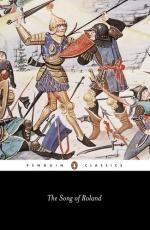
The Song of Roland, generally believed to have been composed around 1130, is the oldest surviving French epic. It is the preeminent example of the chanson de geste, or "song of great deeds," a poetic form usually used to tell stories of heroism rather than the accounts of love relationships that became more popular later in the twelfth century. The work knew an astounding success throughout the Middle Ages. Versions of the tale were popular in England, Italy, Germany, the Netherlands, Scandinavia, and Wales until about 1500, but the story languished during the Renaissance (1500-1700). Starting in the late nineteenth century, scholars in France and Germany began to study the tale, noting its relevance to the formation of modern-day France. The epic draws a line between France and Islamic Spain By describing "la douce France" (sweet France) as consisting of a particular people, faith, and territory, the anonymous author lays the foundation for the emerging French nation-state.
The story establishes the eighth-century Charlemagne as the father of France. Particular attention is giving to naming specific barons who were, in fact, not contemporaries of Charlemagne but twelfth-century feudal lords, contemporaries of the anonymous author or authors of the Song. The story glorifies these barons by contrasting their honor, valor, and courage against the treachery of the Muslims, then called Saracens. The Christian forces of the French defeat the Muslims with divine intervention and great determination.
The characters of the story are still revered in French culture today. The treasonous French baron, Ganelon, who betrays the noble Roland to the enemy, embodies deception. Roland, Charlemagne's nephew, serves as a model of obedience and bravery in the face of overwhelming odds. The Song of Roland serves as the foundation of French literature, giving modern readers insight into the inception of the cultural life of France.
Read more from the Study Guide
|
This section contains 302 words (approx. 1 page at 400 words per page) |
|




