
 Print
Print Word
Word PDF
PDF|
This section contains 158 words (approx. 1 page at 400 words per page) |

|
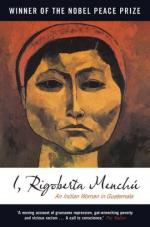
I, Rigoberta Menchu: An Indian Woman in Guatemala Summary & Study Guide Description
I, Rigoberta Menchu: An Indian Woman in Guatemala Summary & Study Guide includes comprehensive information and analysis to help you understand the book. This study guide contains the following sections:
This detailed literature summary also contains Bibliography on I, Rigoberta Menchu: An Indian Woman in Guatemala by Rigoberta Menchú.
When Menchú's autobiography was first published in 1984, it catapulted her and her story, describing the exploitation and mistreatment of her people, to the forefront of international attention. The book imbued her work in organizing the Guatemalan peasantry with added authority and credibility. The voice of the Guatemalan peasants, which had been heretofore silenced by government oppression, illiteracy, and linguistic barriers, was now available to the global public, and Menchú's narrative encompassed the story of oppressed people everywhere. Critics alleged that parts of Menchú's story were exaggerated or untrue, some even pursuing years of fieldwork to prove their allegations. Supporters have insisted that the verisimilitude of her story extends from the commonality of her experience with that of other Guatemalan peasants, in fact, most Guatemalan peasants. Menchú eloquently delineates the conflicts between ladinos and Indians, landowners and peasants, the government and the resistance, men and women, and change and tradition.
Read more from the Study Guide
|
This section contains 158 words (approx. 1 page at 400 words per page) |
|




