
Forgot your password?  
Related Topics

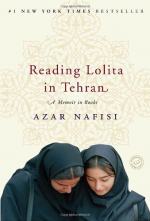
Reading Lolita in Tehran, A Memoir in Books | Quiz

This Study Guide consists of approximately 77 pages of chapter summaries, quotes, character analysis, themes, and more - everything you need to sharpen your knowledge of Reading Lolita in Tehran.

Reading Lolita in Tehran, A Memoir in Books | Quiz

Students: Take our free Reading Lolita in Tehran, A Memoir in Books quiz below, with 25 multiple choice questions that help you test your knowledge. Determine which chapters, themes and styles you already know and what you need to study for your upcoming essay, midterm, or final exam. Take the free quiz now!

Teachers: The BookRags Lesson Plan contains hundreds of test and quiz questions, including multiple choice, short answer, and essay questions. Create your own quiz or test with our automatic test generator, or choose from our ready-to-go chapter quizzes, midterm tests, and final exams. Don’t waste time reinventing the wheel, get the Lesson Plan today!

Directions: Click on the correct answer.

1)

How does Nafisi's acquaintance describe her students? (from Part 1: Chapter 16)

As "nice girls."
As "pretty women."
As "good students."
As "fine people."
2)

Why does Nafisi state it is important to introduce her students to the works of Saul Bellow? (from Part 4: Chapters 13 - 26)

Because Bellow provides an aesthetic counterpoint to the limitations of Austen's novels.
Because Bellow shows the problems and fears of the West, and Nafisi believes her students look at the West uncritically.
Because Bellow presents Western society as not being decadent, and Nafisi believes her students need to see Western culture as not being decadent.
Because she believes her students should read more American authors.
3)

At the beginning of Chapter 18, what does Nafisi ask the reader to imagine? (from Part 1: Chapter 18)

They are walking down a leafy path.
They are standing on a street in Tehran.
They are inside her apartment.
They are at the university.
4)

What becomes part of the "landscape" of Nafisi's class? (from Part 1: Chapter 17)

The oppression of the Iranian regime.
The mountains in the mirror.
The presence of the magician.
Nafisi's life and family.
5)

Where do the intruders to Nafisi's house go once they are in her house? (from Part 1: Chapter 19)

To the front balcony.
Into the library.
To the rear balcony.
To the kitchen.
6)

What is the relationship between Nafisi and her first husband? (from Part 2: Chapters 1 - 4)

He teaches her how to become a demonstrator and serves as her first mentor.
They clash over appropriate ways for women to behave and ultimately divorce.
She learns from him how to become a traditional Iranian wife.
They enjoy a good relationship until Nafisi begins demonstrating in support of the Iranian government.
7)

What happens to Iranian writers and publishers during the mid-nineties? (from Part 4: Chapters 13 - 26)

They are exiled to America and other Western cultures.
They are only allowed to write in Persian.
They are forbidden from publishing their works.
They are interrogated, expelled, and sometimes killed.
8)

In the epilogue, Nafisi makes an allusion to which novel? (from Epilogue)

"Lolita."
"Daisy Miller."
"The Great Gatsby."
"Invitation to a Beheading."
9)

According to Nafisi, how can one stop "dancing with the jailer"? (from Part 1: Chapters 21 - 22)

Give in to the desires of the regime and follow the nation's laws.
Become a part of the ruling party and end oppression.
Remember that life is cyclical, and this time will end soon.
Find a way to preserve one's uniqueness and individuality despite opposition and persecution.
10)

How does Nafisi describe her memories? (from Part 1: Chapter 18)

As the barrier between her and her students.
As surrounding her every day.
As invaders that arrive abruptly and unexpectedly.
As sweet tastes inside her head.
11)

Who does Nafisi meet with in Part 3, Chapter 10? (from Part 3: Chapters 6 - 11)

Her study group.
Local religious leaders.
The magician.
Officials at a local university.
12)

Why is Nafisi uncomfortable with Mr. Bahir's action at the end of Part 2, Chapter 6? (from Part 2: Chapters 5 - 8)

By placing his hands behind his back, he negates her gesture of goodwill.
His action forces her to report him to the police.
She does not wish to shake hands with a student.
She does not know him well and his presence feels threatening.
13)

Why do the intruders want access to Nafisi's house? (from Part 1: Chapter 19)

They think she is selling and using drugs.
They want to see what was happening on her neighbor's property.
She is able to provide them with safety.
They are searching for contraband.
14)

Why does Nafisi say that war was a blessing to some Iranians? (from Part 3: Chapters 32 - 35)

War gave some Iranians a sense of community, purpose, and power.
War caused Iranians to return to their religious roots.
War gave some Iranians a chance to kill people they disliked.
War allowed some Iranians to get rich quickly.
15)

Why are Manna's friends reprimanded by guards? (from Part 1: Chapter 17)

Because they were wearing makeup.
Because they were not wearing their veils.
Because they were walking on the street.
Because they were biting apples too seductively.
16)

Why does the government first enforce the requirement that women remain covered in workplaces and shops? (from Part 3: Chapters 1 - 5)

Because women object to the law, and the government wants to reinforce its authority.
Because the shop owners are uncomfortable serving women who are not covered.
Because women are already wearing the chador at home.
Because there is no way to enforce the requirement at the university.
17)

What gift does Nafisi give to the magician? (from Part 3: Chapters 32 - 35)

A pair of scissors shaped like a rooster.
A bottle of homemade wine.
A box of foreign chocolates.
A book written in English.
18)

How does the class study of "The Great Gatsby" affect Nafisi? (from Part 2: Chapters 15 - 20)

She becomes sad, because her students do not enjoy the novel.
She discovers that she loves teaching revolutionary novels.
She gains insight into her feelings and desires about her work and the meaning of literature in her life.
She learns that she is really an American, not an Iranian.
19)

How is Mr. Nahvi like Jane Austen's character Elizabeth Bennet? (from Part 4: Chapters 7 - 12)

Both are able to express their love in acceptable fashion.
Both are obsessed with finding fault with things and people they dislike.
Both are members of the ruling class of society.
Both are popular with their peers.
20)

What happens to Nassrin after she leaves Iran? (from Epilogue)

She returns to Iran because she misses her family.
She arrives safely in England.
She travels to America.
She stays in contact with Nafisi.
21)

Why does Nafisi include the scene from "Invitation to a Beheading" in Chapter 22? (from Part 1: Chapters 21 - 22)

Nafisi believes that scene shows how her students will be mistreated if they are thrown in jail.
The scene was just studied in Nafisi's study group.
She is making the point that all governments are corrupt.
It illustrates the way totalitarian governments force victims to participate in crimes against themselves.
22)

Who delays Nafisi's expulsion from the university? (from Part 2: Chapters 21 - 26)

Mr. Bahir and some of Nafisi's former students.
Dr. A.
The Committee on the Cultural Revolution.
Nafisi's secular colleagues.
23)

What question does Nafisi ask at the beginning of her first class at the University of Tehran? (from Part 2: Chapters 5 - 8)

What did you think about the choice of books for this course?
Why do you believe there will be a cultural revolution?
Why should anyone read fiction?
Why is it important to get a college education?
24)

What game does Nafisi play when she begins wearing a black robe? (from Part 3: Chapters 1 - 5)

She pretends that nothing has changed, and she is not wearing a robe.
She pretends she is a religious leader and has additional authority.
She pretends her whole body disappears, and she becomes invisible.
She pretends that everyone can see her as a human being.
25)

Why is Negar upset? (from Part 1: Chapter 17)

She is not allowed to console a friend who had been poorly treated at school.
She is being taken to jail for insubordination.
She is not allowed to join Nafisi's literature discussions.
Her friendship bracelet has been taken away at school.
Copyrights
Reading Lolita in Tehran, A Memoir in Books from BookRags and Gale's For Students Series. ©2005-2006 Thomson Gale, a part of the Thomson Corporation. All rights reserved.
Follow Us on Facebook
