
Forgot your password?  
Related Topics

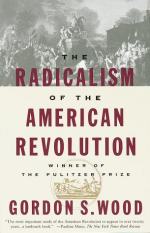
The Radicalism of the American Revolution Quiz

This Study Guide consists of approximately 83 pages of chapter summaries, quotes, character analysis, themes, and more - everything you need to sharpen your knowledge of The Radicalism of the American Revolution.

The Radicalism of the American Revolution Quiz

Students: Take our free The Radicalism of the American Revolution quiz below, with 25 multiple choice questions that help you test your knowledge. Determine which chapters, themes and styles you already know and what you need to study for your upcoming essay, midterm, or final exam. Take the free quiz now!

Teachers: The BookRags Lesson Plan contains hundreds of test and quiz questions, including multiple choice, short answer, and essay questions. Create your own quiz or test with our automatic test generator, or choose from our ready-to-go chapter quizzes, midterm tests, and final exams. Don’t waste time reinventing the wheel, get the Lesson Plan today!

Directions: Click on the correct answer.

1)

What was the ideology of the Enlightenment? (from Part 2, Chapter 6)

Rationalism.
Mysticism.
Counterculture.
Republicanism.
2)

Who said, "All Christendom has been decomposed, broken in pieces" in this "fiery furnace of democracy"? (from Part 3, Chapter 18)

Samuel Blodgett.
Harrison Gray Otis.
Elias Smith.
Thomas Campbell.
3)

Historically, what do good Englishmen do? (from Part 2, Chapter 7)

Resist tyranny.
Help the downtrodden.
Build their economy.
Fortify their defenses.
4)

What were colonial American rulers always concerned about regarding their positions? (from Part 2, Chapter 6)

The finances to run their office.
There would be conspiracies agains the people they govern.
The collapse of the government.
There would be plots against them.
5)

Where was Ben Franklin quartered when he sailed to England in 1724? (from Part 2, Chapter 7)

With the captain.
With the crew.
Steerage.
First class.
6)

Within the colonial family unit, what right did adult children demand? (from Part 2, Chapter 9)

To strike out on their own.
To choose their own spouses.
To choose their own employment.
To be responsible for themselves.
7)

Who said, "the attracting force of universal love" existed in all people? (from Part 3, Chapter 18)

George Cabot.
William Channing.
William Sampson.
Joel Barlow.
8)

Who was America's first art critic? (from Part 3, Chapter 19)

James Guild.
William Tudor.
John Neal.
Benjamin Hawkins.
9)

What were the religious upheavals in the colonies eventually called? (from Part 2, Chapter 8)

Puritan Petitions.
Religious Revolution.
Church's Decision.
Great Awakening.
10)

How did non-English colonial Americans feel about the monarchy? (from Part 2, Chapter 7)

They had great respect for it.
They hoped it will continue.
They had no attachment to it.
They wished it were abolished.
11)

Who wrote "Common Sense"? (from Part 2, Chapter 12)

Robert Munsford.
Jeremy Belknap.
Samuel Cooper.
Thomas Paine.
12)

When did the Seven Years War take place? (from Part 2, Chapter 9)

1750s.
1730s.
1740s.
1760s.
13)

Concerning the marketplace, how did colonial American and British aristocracy differ? (from Part 2, Chapter 7)

British are involved in the marketplace while Americans are not
Americans are involved in the marketplace while British are not.
British are better in the marketplace.
Americans are better in the marketplace.
14)

Who said that the secret of America's prosperity was the celebration of work? (from Part 3, Chapter 15)

Francis Grund.
Theodore Sedgewick.
Edward Everett.
Micheal Chevalier.
15)

What would eventually secure the people's right to participate in government? (from Part 2, Chapter 6)

Religious freedom.
The right to vote.
The right to own property.
Legal documents.
16)

What year was the Continental Congress? (from Part 2, Chapter 11)

1774.
1775.
1772.
1773.
17)

In the 1790s, who proclaimed that every man and woman in every society ought to work? (from Part 3, Chapter 15)

Benjamin Rush.
Edward Everett.
John Adams.
Parson Weems.
18)

Who drew up the Virginia Declaration of Rights? (from Part 2, Chapter 10)

James Cheetham.
William Livingston.
George Mason.
Charles Carroll.
19)

By 1820, which territories had doubled the size of America? (from Part 3, Chapter 17)

Florida and Alabama.
Florida and Louisiana.
Louisiana and Mississippi.
Alabama and Mississippi.
20)

Who wrote the book "Notions of the Americans"? (from Part 3, Chapter 19)

Benjamin Rush.
James Fennimore Cooper.
Francis Hopkinson.
Noah Webster.
21)

Who bought the small planters tobacco crops rather than taking them on consignment? (from Part 2, Chapter 8)

Welsh merchant houses.
Irish merchant houses.
British merchant houses.
Scottish merchant houses.
22)

What did John Adams consider to be the main mark of a gentleman? (from Part 2, Chapter 11)

A liberal arts education.
Dedication to public service.
Virture and charitable causes.
Wealth and ease of life.
23)

What religious belief did Thomas Jefferson and Ben Franklin hold? (from Part 2, Chapter 9)

Anglican.
Puritan.
Deist.
Christian.
24)

Who had an international reputation as a hero in the 1780s? (from Part 2, Chapter 11)

Thomas Jefferson.
Ben Franklin.
George Washington.
John Adams.
25)

Historically, what kinds of men are guilty for all wars and tyrannies? (from Part 2, Chapter 6)

Extraordinary men.
Educated men.
Politically powerful men.
Egotistical men.
Copyrights
The Radicalism of the American Revolution from BookRags and Gale's For Students Series. ©2005-2006 Thomson Gale, a part of the Thomson Corporation. All rights reserved.
Follow Us on Facebook
