
 Print
Print Word
Word PDF
PDF|
This section contains 308 words (approx. 1 page at 400 words per page) |

|
Art and Illusion: A Study in the Psychology of Pictorial Representation Summary & Study Guide Description
Art and Illusion: A Study in the Psychology of Pictorial Representation Summary & Study Guide includes comprehensive information and analysis to help you understand the book. This study guide contains the following sections:
This detailed literature summary also contains Bibliography on Art and Illusion: A Study in the Psychology of Pictorial Representation by Ernst Gombrich.
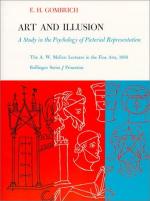
Art and Illusion: A Study in the Psychology of Pictorial Representation, published in 1960, is one of the most influential books written during the twentieth century on the subject of art. Following the publication in 1950 of his incredibly popular book, The Story of Art, Ernst Hans Josef Gombrich consented to give the A. W. Mellon Lectures in the Fine Arts at the National Gallery of Art in Washington, D.C., in 1956. Those lectures became the book Art and Illusion. Critics generally agree that this volume, among Gombrich's myriad publications, is his most far-reaching and influential work. Gombrich continued to advocate many of the ideas put forth in this book throughout his life. Indeed, he not only revised the text and wrote a new preface for the second edition of the book published in 1961, he also wrote a new preface for the "Millennium Edition" published in 2000, in his ninety-first year.
In Art and Illusion, Gombrich poses this essential question: "Why is it that different ages and different nations have represented the visible world in such different ways?" Throughout the pages of the book, Gombrich attempts to address this question using science, psychology, and philosophy to help formulate his answer. At the heart of his theory is the notion of "schemata," that is, the idea that the artist "begins not with his visual impression but with his idea or concept" and that the artist adjusts this idea to fit, as well as it can, the object, landscape, or person before him or her. Gombrich calls this theory "making and matching."
While art critics and historians have developed new ideas about representation since the first publication of Art and Illusion, Gombrich and his ideas continue to be a mighty force. Thus, serious students of art and art history find Art and Illusion an important and necessary part of their education.
Read more from the Study Guide
|
This section contains 308 words (approx. 1 page at 400 words per page) |
|




