
BookRags.com Literature Guides Literature
Guides
Criticism & Essays Criticism &
Essays
Questions & Answers Questions &
Answers
Lesson Plans Lesson
Plans
My Bibliography Periodic Table U.S. Presidents Shakespeare Sonnet Shake-Up
Research Anything:        
History | Encyclopedias | Films | News | Create a Bibliography | More... Login | Register | Help


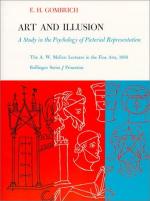
Art and Illusion: A Study in the Psychology of Pictorial Representation Study Guide

Print-Friendly  Order the PDF version  Order the RTF version
by Ernst Gombrich
About 26 pages (7,867 words)

Bookmark and Share Questions on this work? Just ask!

Compare & Contrast

1950s: Post-World War II Europe is still recovering from the uncertainties and devastation of the war years. The growth of the Soviet Union and ongoing hostilities between Eastern Bloc countries and NATO lead to the Cold War.

1990s: Although the Cold War ends with the breakup of the Soviet Union in the 1980s, fear and uncertainty continue to dominate the international political scene.

1950s: Growth of technology as well as the "miracles" of science lead to a general belief in the application of the scientific method to all fields of endeavor, including art criticism and history.

1990s: While technology continues to grow at unprecedented rates, there is evidence of some distrust of science, most notable in the critiques of science offered by scholars such as Bruno Latour.

1950s: Gombrich's theories are set forth in the 1956.....

This is a free excerpt of 135 words. This section contains 287 words. This study guide contains 7,867 words (approx. 26 pages at 300 words per page).

Read the rest of this Literature Guide with our Art and Illusion: A Study in the Psychology of Pictorial Representation Access Pass.

Ask any question on Art and Illusion: A Study in the Psychology of Pictorial Representation and get it answered FAST!
Answer questions in BookRags Q&A and earn points toward
discounted or even FREE Study Guides and other BookRags products!
Learn more about BookRags Q&A
Copyrights
Art and Illusion: A Study in the Psychology of Pictorial Representation from BookRags and Gale's For Students Series. ©2005-2006 Thomson Gale, a part of the Thomson Corporation. All rights reserved.

Join BookRagslearn moreJoin BookRags


About BookRags | Customer Service | Report an Error | Terms of Use | Privacy Policy



