
 Print
Print Word
Word PDF
PDF|
This section contains 201 words (approx. 1 page at 400 words per page) |

|
Profiles in Courage Summary & Study Guide Description
Profiles in Courage Summary & Study Guide includes comprehensive information and analysis to help you understand the book. This study guide contains the following sections:
This detailed literature summary also contains Bibliography and a Free Quiz on Profiles in Courage by John F. Kennedy.
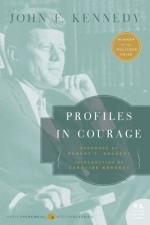
Throughout his youth, John F. Kennedy suffered numerous ailments. When he endured two near-fatal spine operations in 1954, he decided to put his recovery period to good use. He and his aides (he was a U.S. Senator at the time) began a book profiling American politicians he admired for their courage and individualism in the face of party and constituent pressures. Kennedy was particularly struck by how these nine men were willing to risk their political careers to maintain the integrity of their personal value systems and their love of country. This book, of course, became Profiles in Courage, which was published in 1956.
The book won the 1957 Pulitzer Prize for biography, in addition to the American Library Association Notable Book Award and the Christopher Book Award, both in 1956. In 1989, Kennedy's brother, Senator Edward Kennedy, established an annual Profile in Courage award based on the principles set forth in the book. It is given every year on John F. Kennedy's birthday to an elected official (past or present) whose career represents courage and integrity in the face of political pressure. The prize includes $25,000 and a silver lantern. The prize is intended to keep the spirit of Profiles in Courage alive.
Read more from the Study Guide
|
This section contains 201 words (approx. 1 page at 400 words per page) |
|




