
Forgot your password?  
Related Topics

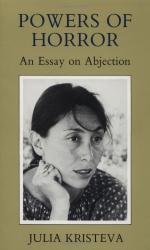
Powers of Horror: An Essay on Abjection | Quiz

This Study Guide consists of approximately 34 pages of chapter summaries, quotes, character analysis, themes, and more - everything you need to sharpen your knowledge of Powers of Horror.

Powers of Horror: An Essay on Abjection | Quiz

Students: Take our free Powers of Horror: An Essay on Abjection quiz below, with 25 multiple choice questions that help you test your knowledge. Determine which chapters, themes and styles you already know and what you need to study for your upcoming essay, midterm, or final exam. Take the free quiz now!

Teachers: The BookRags Lesson Plan contains hundreds of test and quiz questions, including multiple choice, short answer, and essay questions. Create your own quiz or test with our automatic test generator, or choose from our ready-to-go chapter quizzes, midterm tests, and final exams. Don’t waste time reinventing the wheel, get the Lesson Plan today!

Directions: Click on the correct answer.

1)

What book of the Bible addresses rules around eating meat? (from Chapter 4, Semiotics of Biblical Abomination)

Numbers.
Exodus.
Genesis.
Leviticus.
2)

Chapter 11 "Powers of Horror" begins with a Celine quote, in which he says what kind of Kirghiz can cook up tricks? (from Chapter 11, Powers of Horror)

Kirghiz politicians.
Kirghiz librarians.
Kirghiz teachers.
Kirghiz natives.
3)

What religion does Kristeva say Christianity emerged from? (from Chapter 5, . . . Qui Tollis Peccata Mundi)

Judaism.
Paganism.
Buddhism.
Mormonism.
4)

What act in Jewish laws makes women impure for weeks? (from Chapter 4, Semiotics of Biblical Abomination)

Sex.
Menstruation.
Rape.
Childbirth.
5)

According to Kristeva, Christ invited his disciples to see what from several angles? (from Chapter 5, . . . Qui Tollis Peccata Mundi)

His teachings about God.
The validity of laws.
Ethical issues.
Issues regarding his diety.
6)

Kristeva says that the reader is thrown into what kind of state when reading Celine? (from Chapter 6, Celine: Neither Actor Nor Martyr)

Uncomfortable.
Strange.
Familar.
Deviant.
7)

Chapter 11 "Powers of Horror" begins with a Celine quote from what novel? (from Chapter 11, Powers of Horror)

Voyage au bout de la nuit.
Guignol's band,
Mort à crédit
Féerie pour une autre fois.
8)

Kristeva says Celine is a convenient example of abject literature because he is what? (from Chapter 11, Powers of Horror)

Educated.
Simple-minded.
Privileged.
Fluctuating.
9)

Kristeva says Celine anchors the destiny of literature through a re-assumption of what? (from Chapter 6, Celine: Neither Actor Nor Martyr)

The sins of man as defined by God.
The death of God.
The goddlessness of the average believer.
What lies hidden by God.
10)

Kristeva says Judaism always conceived of impurity as what kind of reality? (from Chapter 5, . . . Qui Tollis Peccata Mundi)

Metaphorical.
Symbolic.
Material.
Internal.
11)

Who did Celine devote his doctoral dissertation to? (from Chapter 8, Those Females Who Wreck the Infinite)

Oliver Wendell Holmes.
Caroline M De Costa.
Gustav Adolf Michaelis.
Ignaz Semmelweis.
12)

Whose writings does Kristeva encounter in "the black, romantic rage"? (from Chapter 6, Celine: Neither Actor Nor Martyr)

Lautreamont.
Verne.
Dumas.
Bourges.
13)

Unlike Jews, Kristeva says Christians disregard what? (from Chapter 5, . . . Qui Tollis Peccata Mundi)

Christ's teachings.
The Levitical law.
The New Testament.
The ten commandments.
14)

Kristeva says the hatred of Jews is a metaphor for a very primal struggle against what perception? (from Chapter 9, Ours to Jew or Die)

The favored brother.
The favored mistress.
The favored parent.
The favored sister.
15)

In Judiasm, people are instructed to be wary of men with what trait? (from Chapter 4, Semiotics of Biblical Abomination)

Small chins.
Blue eyes.
Blonde hair.
Flat noses.
16)

What does Kristeva say Celine's depictions of females all lean toward? (from Chapter 8, Those Females Who Wreck the Infinite)

The grotesque.
Nazism.
Beauty.
Incest.
17)

Which of Celine's family members had the first name Celine? (from Chapter 9, Ours to Jew or Die)

His grandmother.
His sister.
His aunt.
His mother.
18)

During the 1930s, what group does Kristeva say was arguing for the status quo? (from Chapter 7, Suffering and Horror)

Communists.
National Socialists.
Capitalists.
Republicans.
19)

Kristeva quotes Celine as saying his aim was to do what to language? (from Chapter 10, In the Beginning and Without End . . .)

Regurgitate.
Resensitize.
Revitalize.
Resuscitate.
20)

What Sartre work does Kristeva use as an example of abject literature? (from Chapter 11, Powers of Horror)

No Exit.
Nausea.
Hell is Other People.
The Roads to Freedom.
21)

Kristeva says that today's universe is divided between boredom, abjection, and what? (from Chapter 6, Celine: Neither Actor Nor Martyr)

Defined loving.
Morbid loathing.
Sharp intelligence.
Piercing laughter.
22)

In which of Celine's works is dizziness a motif? (from Chapter 7, Suffering and Horror)

Death on the Installment Plan.
Trifles for a Massacre.
School of Corpses.
Journey to the End of the Night.
23)

What kind of narrative machine does Kristeva say leaves her shaken to the point of exaltation? (from Chapter 6, Celine: Neither Actor Nor Martyr)

Shakespearean.
Freudian.
Sadean.
Calvinist.
24)

How does Celine often depict maternal figures? (from Chapter 8, Those Females Who Wreck the Infinite)

As loving.
As sexual.
As violent.
As bored.
25)

What type of sea creatures are forbidden from being eaten, according to the Old Testament? (from Chapter 4, Semiotics of Biblical Abomination)

Shellfish.
Goldfish.
Jellyfish.
Octypus.
Copyrights
Powers of Horror: An Essay on Abjection from BookRags and Gale's For Students Series. ©2005-2006 Thomson Gale, a part of the Thomson Corporation. All rights reserved.
Follow Us on Facebook
Homework Help
