
Forgot your password?  

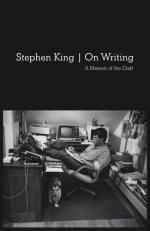
On Writing: A Memoir of the Craft Quiz

This Study Guide consists of approximately 37 pages of chapter summaries, quotes, character analysis, themes, and more - everything you need to sharpen your knowledge of On Writing.

On Writing: A Memoir of the Craft Quiz

Students: Take our free On Writing: A Memoir of the Craft quiz below, with 25 multiple choice questions that help you test your knowledge. Determine which chapters, themes and styles you already know and what you need to study for your upcoming essay, midterm, or final exam. Take the free quiz now!

Teachers: The BookRags Lesson Plan contains hundreds of test and quiz questions, including multiple choice, short answer, and essay questions. Create your own quiz or test with our automatic test generator, or choose from our ready-to-go chapter quizzes, midterm tests, and final exams. Don’t waste time reinventing the wheel, get the Lesson Plan today!

Directions: Click on the correct answer.

1)

What type of job does King believe writing to be? (from What Writing Is)

A joyous one.
One requiring hard work.
One of drudgery.
A serious one.
2)

What suggestion does King's wife make during his recovery period? (from On Living: A Postscript)

To work harder at the physical therapy.
To get back to work.
To enjoy this period of freedom.
To keep a journal of his experiences.
3)

What does King help his uncle fix as a child? (from Toolbox)

A window screen.
The kitchen sink.
A leaky faucet in the bathroom.
The driveway.
4)

How does King state he feels about writing for money? (from What Writing Is)

Writing is art, and as such, it may not pay.
Everyone writes for money.
Writing for money is unnecessary; it will come.
One cannot write in anticipation of making money.
5)

According to King, what goes in the top of the writer's toolbox? (from Toolbox)

A grounding in literature.
Practice in writing.
The most important tools for writing.
Study and preparation through classwork.
6)

What does King say about adverbs? (from Toolbox)

To use them to intensify meaning.
To limit their use.
To use colorful adverbs to make the writing more vivid.
To include them when characters are being emotional.
7)

What is the last thing on King's mind during the recovery period? (from On Living: A Postscript)

Reading.
Watching TV.
Talking.
Writing.
8)

When does King come to his revelation about his writing? (from On Living: A Postscript)

While he was writing the book, On Writing.
After he finished the novel, The Green Mile.
Through the accident and during his recovery.
While compiling a book of short stories.
9)

Does King feel that a writer should blindly follow all the rules in the book he recommends? (from Toolbox)

Yes, because these rules are the ultimate authority.
Yes. They are excellent rules.
Yes, but the writer should remember and use the exceptions, too.
No. He feels some of the rules are 'a little over the top'.
10)

What does King's uncle inherit? (from Toolbox)

A car.
A silver watch.
A large toolbox.
The house.
11)

From King's statements, what element should be used to illustrate a character? (from On Writing)

Their typical, everyday dress.
Their thoughts.
Their mannerisms.
Their speech.
12)

What is King's most important injunction to writers? (from Toolbox)

Writers should be honest.
Writers need to have their own space.
Writers must work every day.
Writers must be original.
13)

How does King use this advice from his uncle? (from Toolbox)

He always takes all his tools when he has to fix something.
He applies it to his writing.
He buys new tools every time he receives a check for his work.
He falls in love with tools and creates his own toolbox for chores around the house.
14)

Why was the person who caused King's accident going into town? (from On Living: A Postscript)

He wanted a candy bar.
He needed cigarettes.
He wanted to buy a lottery ticket.
He needed gas for a trip the next day.
15)

What is King's overall opinion on writing as a profession? (from What Writing Is)

It is humorous.
It is frivolous.
It is didactic.
It is serious and straightforward.
16)

Where does King get the idea for the novel Misery? (from On Writing)

From a dream.
From his wife.
From a book he was reading.
From a TV show.
17)

Who causes King's accident? (from On Living: A Postscript)

Bryan Smith.
Emile Jenkins.
Mark Givens.
Bobby Jones.
18)

What activity might cause King to work on days he normally doesn't work? (from On Writing)

Being sick on days previous to the holiday.
Having a writer's block and not producing his usual amount of words previously.
Being in the middle of a new novel.
Having a deadline to meet.
19)

How is King transported to the second place after his accident? (from On Living: A Postscript)

By an EMS vehicle.
By helicopter.
By ambulance.
In a private car.
20)

What did King discover about the act of writing after his accident? (from On Living: A Postscript)

He could take it or leave it.
It was life support.
He did not enjoy writing as much as before.
Writing was no longer an obsession with him.
21)

What book does King recommend for grammar study? (from Toolbox)

Betty Azar's Understanding and Using English Grammar.
Prentice-Hall Handbook of Grammar.
Any good high school grammar text.
Strunk and White's Elements of Style.
22)

There is an old adage in writing: write what you know. How does King feel about this? (from On Writing)

He believes that writers should follow this advice, but not in a literal way.
He urges writers to ignore this advice and write what they think is important and of value.
He suggests writers research questions they are interested in and then write about them.
He hopes that writers will experiment and not be limited by this statement.
23)

What advice does King give on paragraphs? (from Toolbox)

King wants writers to see their paragraphs as a graphic picture on a page.
King believes paragraphs should not vary in length.
To pay attention to the length and number of paragraphs.
King feels paragraphs should have a standard length of 8 to 10 lines.
24)

Which genre does King feel Misery will belong to when he begins to write the story? (from On Writing)

A novel.
A novella.
A short story.
A screenplay.
25)

According to King, what are two reasons to write? (from What Writing Is)

Writing as a passion; writing as a career.
Writing as a passion; writing as a way to gain fame.
Writing as a serious career; writing as a hobby.
Writing for fame and glory; writing for a livelihood.
Copyrights
On Writing: A Memoir of the Craft from BookRags and Gale's For Students Series. ©2005-2006 Thomson Gale, a part of the Thomson Corporation. All rights reserved.
Follow Us on Facebook
