
|
|

|
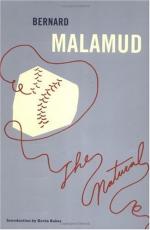
by Bernard Malamud
| About 76 pages (22,823 words) |
|

©2000-2008 BookRags, Inc. ALL RIGHTS RESERVED.
The following sections of this BookRags Premium Study Guide is offprint from Gale's For Students Series: Presenting Analysis, Context, and Criticism on Commonly Studied Works: Introduction, Author Biography, Plot Summary, Characters, Themes, Style, Historical Context, Critical Overview, Criticism and Critical Essays, Media Adaptations, Topics for Further Study, Compare & Contrast, What Do I Read Next?, For Further Study, and Sources.
©1998-2002; ©2002 by Gale. Gale is an imprint of The Gale Group, Inc., a division of Thomson Learning, Inc. Gale and Design® and Thomson Learning are trademarks used herein under license.
The following sections, if they exist, are offprint from Beacham's Encyclopedia of Popular Fiction: "Social Concerns", "Thematic Overview", "Techniques", "Literary Precedents", "Key Questions", "Related Titles", "Adaptations", "Related Web Sites". © 1994-2005, by Walton Beacham.
The following sections, if they exist, are offprint from Beacham's Guide to Literature for Young Adults: "About the Author", "Overview", "Setting", "Literary Qualities", "Social Sensitivity", "Topics for Discussion", "Ideas for Reports and Papers". © 1994-2005, by Walton Beacham.
All other sections in this Literature Study Guide are owned and copywritten by BookRags, Inc.
No part of this work covered by the copyright hereon may be reproduced or used in any form or by any means graphic, electronic, or mechanical, including photocopying, recording, taping, Web distribution or information storage retrieval systems without the written permission of the publisher.
This Premium Study Guide is an offprint from Novels For Students: Presenting Analysis, Context, and Criticism on Commonly Studied Novels. Novels For Students Project Editor David Galens Editorial Sara Constantakis, Elizabeth A. Cranston, Kristen A. Dorsch, Anne Marie Hacht, Madeline S. Harris, Arlene Johnson, Michelle Kazensky, Ira Mark Milne, Polly Rapp, Pam Revitzer, Mary Ruby, Kathy Sauer, Jennifer Smith, Daniel Toronto, Carol Ullmann Research Michelle Campbell, Nicodemus Ford, Sarah Genik, Tamara C. Nott, Tracie Richardson Data Capture Beverly Jendrowski Permissions Mary Ann Bahr, Margaret Chamberlain, Kim Davis, Debra Freitas, Lori Hines, Jackie Jones, Jacqueline Key, Shalice Shah-Caldwell Imaging and Multimedia Randy Bassett, Dean Dauphinais, Robert Duncan, Leitha Etheridge-Sims, Mary Grimes, Lezlie Light, Jeffrey Matlock, Dan Newell, Dave Oblender, Christine O'Bryan, Kelly A. Quin, Luke Rademacher, Robyn V. Young Product Design Michelle DiMercurio, Pamela A. E. Galbreath, Michael Logusz Manufacturing Stacy Melson © 1998-2002; © 2002 by Gale. Gale is an imprint of The Gale Group, Inc., a division of Thomson Learning, Inc. Gale and Design® and Thomson Learning are trademarks used herein under license. For more information, contact The Gale Group, Inc 27500 Drake Rd. Farmington Hills, MI 48334-3535 Or you can visit our Internet site at http://www.gale.com ALL RIGHTS RESERVED. No part of this work covered by the copyright hereon may be reproduced or used in any form or by any meansgraphic, electronic, or mechanical, including photocopying, recording, taping, Web distribution or information storage retrieval systemswithout the written permission of the publisher. For permission to use material from this product, submit your request via Web at http://www.gale-edit.com/permissions, or you may download our Permissions Request form and submit your request by fax or mail to: Permissions Department The Gale Group, Inc 27500 Drake Rd. Farmington Hills, MI 48331-3535 Permissions Hotline: 248-699-8006 or 800-877-4253, ext. 8006 Fax: 248-699-8074 or 800-762-4058 Since this page cannot legibly accommodate all copyright notices, the acknowledgments constitute an extension of the copyright notice. While every effort has been made to secure permission to reprint material and to ensure the reliability of the information presented in this publication, The Gale Group, Inc. does not guarantee the accuracy of the data contained herein. The Gale Group, Inc. accepts no payment for listing; and inclusion in the publication of any organization, agency, institution, publication, service, or individual does not imply endorsement of the editors or publisher. Errors brought to the attention of the publisher and verified to the satisfaction of the publisher will be corrected in future editions. Introduction Purpose of the Book The purpose of Novels for Students (NfS) is to provide readers with a guide to understanding, enjoying, and studying novels by giving them easy access to information about the work. Part of Gale's "For Students" Literature line, NfS is specifically designed to meet the curricular needs of high school and undergraduate college students and their teachers, as well as the interests of general readers and researchers considering specific novels. While each volume contains entries on "classic" novels frequently studied in classrooms, there are also entries containing hard-to-find information on contemporary novels, including works by multicultural, international, and women novelists. The information covered in each entry includes an introduction to the novel and the novel's author; a plot summary, to help readers unravel and understand the events in a novel; descriptions of important characters, including explanation of a given character's role in the novel as well as discussion about that character's relationship to other characters in the novel; analysis of important themes in the novel; and an explanation of important literary techniques and movements as they are demonstrated in the novel. In addition to this material, which helps the readers analyze the novel itself, students are also provided with important information on the literary and historical background informing each work. This includes a historical context essay, a box comparing the time or place the novel was written to modern Western culture, a critical overview essay, and excerpts from critical essays on the novel. A unique feature of NfS is a specially commissioned critical essay on each novel, targeted toward the student reader. To further aid the student in studying and enjoying each novel, information on media adaptations is provided, as well as reading suggestions for works of fiction and nonfiction on similar themes and topics. Classroom aids include ideas for research papers and lists of critical sources that provide additional material on the novel. Selection Criteria The titles for each volume of NfS were selected by surveying numerous sources on teaching literature and analyzing course curricula for various school districts. Some of the sources surveyed included: literature anthologies; Reading Lists for College-Bound Students: The Books Most Recommended by America's Top Colleges; textbooks on teaching the novel; a College Board survey of novels commonly studied in high schools; a National Council of Teachers of English (NCTE) survey of novels commonly studied in high schools; the NCTE's Teaching Literature in High School: The Novel; and the Young Adult Library Services Association (YALSA) list of best books for young adults of the past twenty-five years. Input was also solicited from our advisory board, as well as educators from various areas. From these discussions, it was determined that each volume should have a mix of "classic" novels (those works commonly taught in literature classes) and contemporary novels for which information is often hard to find. Because of the interest in expanding the canon of literature, an emphasis was also placed on including works by international, multicultural, and women authors. Our advisory board memberseducational professionals helped pare down the list for each volume. If a work was not selected for the present volume, it was often noted as a possibility for a future volume. As always, the editor welcomes suggestions for titles to be included in future volumes. How Each Entry Is Organized Each entry, or chapter, in NfS focuses on one novel. Each entry heading lists the full name of the novel, the author's name, and the date of the novel's publication. The following elements are contained in each entry:
Introduction: a brief overview of the novel which provides information about its first appearance, its literary standing, any controversies surrounding the work, and major conflicts or themes within the work. Author Biography: this section includes basic facts about the author's life, and focuses on events and times in the author's life that inspired the novel in question. Plot Summary: a factual description of the major events in the novel. Lengthy summaries are broken down with subheads. Characters: an alphabetical listing of major characters in the novel. Each character name is followed by a brief to an extensive description of the character's role in the novel, as well as discussion of the character's actions, relationships, and possible motivation. Characters are listed alphabetically by last name. If a character is unnamedfor instance, the narrator in Invisible Man-the character is listed as "The Narrator" and alphabetized as "Narrator." If a character's first name is the only one given, the name will appear alphabetically by that name. Variant names are also included for each character. Thus, the full name "Jean Louise Finch" would head the listing for the narrator of To Kill a Mockingbird, but listed in a separate cross-reference would be the nickname "Scout Finch." Themes: a thorough overview of how the major topics, themes, and issues are addressed within the novel. Each theme discussed appears in a separate subhead, and is easily accessed through the boldface entries in the Subject/Theme Index. Style: this section addresses important style elements of the novel, such as setting, point of view, and narration; important literary devices used, such as imagery, foreshadowing, symbolism; and, if applicable, genres to which the work might have belonged, such as Gothicism or Romanticism. Literary terms are explained within the entry, but can also be found in the Glossary. Historical Context: This section outlines the social, political, and cultural climate in which the author lived and the novel was created. This section may include descriptions of related historical events, pertinent aspects of daily life in the culture, and the artistic and literary sensibilities of the time in which the work was written. If the novel is a historical work, information regarding the time in which the novel is set is also included. Each section is broken down with helpful subheads. Critical Overview: this section provides background on the critical reputation of the novel, including bannings or any other public controversies surrounding the work. For older works, this section includes a history of how the novel was first received and how perceptions of it may have changed over the years; for more recent novels, direct quotes from early reviews may also be included. Criticism: an essay commissioned by NfS which specifically deals with the novel and is written specifically for the student audience, as well as excerpts from previously published criticism on the work (if available). Sources: an alphabetical list of critical material quoted in the entry, with full bibliographical information. Further Reading: an alphabetical list of other critical sources which may prove useful for the student. Includes full bibliographical information and a brief annotation.In addition, each entry contains the following highlighted sections, set apart from the main text as sidebars:
Media Adaptations: a list of important film and television adaptations of the novel, including source information. The list also includes stage adaptations, audio recordings, musical adaptations, etc. Topics for Further Study: a list of potential study questions or research topics dealing with the novel. This section includes questions related to other disciplines the student may be studying, such as American history, world history, science, math, government, business, geography, economics, psychology, etc. Compare and Contrast Box: an "at-a-glance" comparison of the cultural and historical differences between the author's time and culture and late twentieth century/early twenty-first century Western culture. This box includes pertinent parallels between the major scientific, political, and cultural movements of the time or place the novel was written, the time or place the novel was set (if a historical work), and modern Western culture. Works written after 1990 may not have this box. What Do I Read Next?: a list of works that might complement the featured novel or serve as a contrast to it. This includes works by the same author and others, works of fiction and nonfiction, and works from various genres, cultures, and eras.Other Features NfS includes "The Informed Dialogue: Interacting with Literature," a foreword by Anne Dev-ereaux Jordan, Senior Editor for Teaching and Learning Literature (TALL), and a founder of the Children's Literature Association. This essay provides an enlightening look at how readers interact with literature and how Novels for Students can help teachers show students how to enrich their own reading experiences. A Cumulative Author/Title Index lists the authors and titles covered in each volume of the NfS series. A Cumulative Nationality/Ethnicity Index breaks down the authors and titles covered in each volume of the NfS series by nationality and ethnicity. A Subject/Theme Index, specific to each volume, provides easy reference for users who may be studying a particular subject or theme rather than a single work. Significant subjects from events to broad themes are included, and the entries pointing to the specific theme discussions in each entry are indicated in boldface. Each entry has several illustrations, including photos of the author, stills from film adaptations (if available), maps, and/or photos of key historical events. Citing Novels for Students When writing papers, students who quote directly from any volume of Novels for Students may use the following general forms. These examples are based on MLA style; teachers may request that students adhere to a different style, so the following examples may be adapted as needed. When citing text from NfS that is not attributed to a particular author (i.e., the Themes, Style, Historical Context sections, etc.), the following format should be used in the bibliography section: "Night." Novels for Students. Ed. Marie Rose Napierkowski. Vol. 4. Detroit: Gale, 1998. 234-35. When quoting the specially commissioned essay from NfS (usually the first piece under the "Criticism" subhead), the following format should be used: Miller, Tyrus. Critical Essay on "Winesburg, Ohio." Novels for Students. Ed. Marie Rose Napierkowski. Vol. 4. Detroit: Gale, 1998. 335-39. When quoting a journal or newspaper essay that is reprinted in a volume of NfS, the following form may be used: Malak, Amin. "Margaret Atwood's "The Handmaid's Tale and the Dystopian Tradition," Canadian Literature No. 112 (Spring, 1987), 9-16; excerpted and reprinted in Novels for Students, Vol. 4, ed. Marie Rose Napierkowski (Detroit: Gale, 1998), pp. 133-36. When quoting material reprinted from a book that appears in a volume of NfS, the following form may be used: Adams, Timothy Dow. "Richard Wright: "Wearing the Mask," in Telling Lies in Modern American Autobiography (University of North Carolina Press, 1990), 6983; excerpted and reprinted in Novels for Students, Vol. 1, ed. Diane Telgen (Detroit: Gale, 1997), pp. 59-61. We Welcome Your Suggestions The editor of Novels for Students welcomes your comments and ideas. Readers who wish to suggest novels to appear in future volumes, or who have other suggestions, are cordially invited to contact the editor. You may contact the editor via e-mail at: ForStudentsEditors@gale.com. Or write to the editor at: Editor, Novels for Students Gale Group 27500 Drake Road Farmington Hills, MI 48331-3535 The editors wish to thank the copyright holders of the excerpted criticism included in this volume and the permissions managers of many book and magazine publishing companies for assisting us in securing reproduction rights. We are also grateful to the staffs of the Detroit Public Library, the Library of Congress, the University of Detroit Mercy Library, Wayne State University Purdy/Kresge Library Complex, and the University of Michigan Libraries for making their resources available to us. Following is a list of the copyright holders who have granted us permission to reproduce material in this volume of NFS. Every effort has been made to trace copyright, but if omissions have been made, please let us know. COPYRIGHTED EXCERPTS IN NFS, VOLUME 4, WERE REPRODUCED FROM THE FOLLOWING PERIODICALS: American Literature, v. 62, December, 1990. Copyright 1990, Duke University Press Reprinted with permission.Black American Literature Forum, v. 24, Spring, 1990 for "Dream, Deferral, and Closure in "The Women of Brewster Place'" by Jill M. Matus. Reproduced by permission. Canadian Literature, Spring, 1987, for Margaret Atwood's 'The Handmaid's Tale' and the Dystopian Tradition" by Amin Malak. Reproduced by permission of the author.The Christian Century, v. 104, November 4, 1987. Reproduced by permission.- CLA Journal, v. XTV, June, 1971. Copyright, 1971 by The College Language Association. Used bypermission of The College Language Association. Dickens Studies Annual, v. 1,1970. Copyright (c) 1970 by Southern Illinois University Press. All rights reserved. Reproduced by permission of AMS Press, Inc.English Studies, v. 57, June, 1976. (c) 1976 by Swets & Zeitlmger B. V. Reproduced by permission.The Explicator, v. 43, Winter, 1985. Copyright (c) 1985 Helen Dwight Reid Educational Foundation. Reproduced with permission of the Helen Dwight Reid Educational Foundation, published by Heldref Publications, 1319 18th Street, NW, Washington, DC 20036-1802.Massachusetts Studies in English, v. UI, Fall, 1972 for "The Character of Estella in 'Great Expectations'" by Lucille P. Shores. Copyright (c) 1972 by Lucille P. Shores Reproduced by permission of the author.Melus, v. 12, Spring, 1985; v 15, Spring, 1988. Copyright, MELUS, The Society for the Study of Multi-Ethnic Literature of the United States, 1985,1988. Both reproduced by permission.Modern Fiction Studies, v. XJJJ, Summer, 1967. (c) 1967. Reproduced by permission of The Johns Hopkins University Press.MOSAIC: A Journal for the Comparative Study of Literature and Ideas, v. VII, Fall, 1973. (c) MOSAIC, 1973. Acknowledgment of previous publication is herewith made.The Nation, New York, v. 262, February 26,1996. (c) 1996 The Nation magazine/ The Nation Company, Inc. Reproduced by permission.South Atlantic Review, v. 56, May, 1991. Copyright (c) 1991 by the South Atlantic Modern Language Association. Reproduced by permission.The Southern Literary Journal, v. XXII, Spring, 1990. Copyright 1990 by the Department of English, University of North Carolina at Chapel Hill. Reproduced by permission. World Literature Written in English, v. 24, Autumn, 1984. Reproduced by permission.Studies in American Fiction, v. 9, Autumn, 1981. Copyright (c) 1981 Northeastern University. Reproduced by permission.Studies in the Novel, v. XX, Summer, 1988; v. XXTV, Winter, 1992. Copyright 1988, 1992 by North Texas State University. Both reproduced by permission.The Yale Review, v. LXVI, December, 1976 for "Courage and Convention: The Red Badge of Courage" by Paul Breslin. Copynght 1975, by Yale University. Reproduced by permission of the author. COPYRIGHTED EXCERPTS IN NFS, VOLUME 4, WERE REPRODUCED FROM THE FOLLOWING BOOKS: Allen, Shirley S. From James Baldwin: A Critical Evaluation. Edited by Therman B. O'-Daniel. Howard University Press, 1977. Copyright (c) 1977 by the College Language Association. Reproduced by permission of the publisher.Bawer, Bruce. From Diminishing Fictions: Essays on the Modern American Novel and Its Critics. Gray wolf Press, 1988. Reproduced by permission of the author.Bawer, Bruce. From The Aspect of Eternity: Essays by Bruce Bawer. Graywolf Press, 1993. Reproduced by permission of the author. Hamaoui, Lea. From Elie Wiesel: Between Memory and Hope. Edited by Carol Rittner. New York University Press, 1990. Copyright (c) 1990 by New York University. Reproduced by permission.Ozick, Cynthia. From "Saul Bellows's 'Broadway'," in Fame & Folly. Knopf, 1996. Copyright (c) 1996 by Cynthia Ozick. Reproduced by permission of Alfred A. Knopf Inc and Raines & Raines, on behalf of the author.Turner, m, Frederick W. From Bernard Malamud and the Critics. Edited with an introduction by Leslie A. Field and Joyce W. Field. New York University Press, 1970. Copyright (c), 1970 by New York University. Reproduced by permission.Visser, Nicholas. From Rendering Things Visible: Essays on South African Literary Culture. Edited by Martin Trump. Ohio University Press, 1990. (c) Martin Trump, 1990. All rights reserved. Reproduced by permission.Wasserman, Earl R. From Bernard Malamud and the Critics. Edited with an introduction by Leslie A. Field and Joyce W. Field. New York University Press, 1970. Copyright (c), 1970 by New York University. Reproduced by permission.Wood, Diane S. From "Bradbury and Atwood: Exile as Rational Decision," in The Literature of Emigration and Exile. Edited by James Whitlark and Wendall Aypock. Texas Tech University Press, 1992. Copyright 1992 Texas Tech University Press. All rights reserved. Reproduced by permission of the publisher. PHOTOGRAPHS AND ILLUSTRATIONS APPEARING IN NFS, VOLUME 4, WERE RECEIVED FROM THE FOLLOWING SOURCES: Haworth Village, home of the Bronte family, 19th century, engraving.Man standing with top hat in hand, and an elderly woman, seated, illustration by Frederic W. Pailthorpe. From Great Expectations, by Charles Dickens. Dodd, Mead & Company, 1942.Child refugees fleeing a torched camp, 1991, South Africa, photograph. AP/Wide World Photos. Reproduced by permission. Crowds outside Abysinnian Baptist Church, photograph. AP/Wide World Photos. Reproduced by permission."March for Life" Demonstration, photgraph. AP/Wide World Photos. Reproduced by permission.Navajo medicine man at dedication ceremony, photograph. AP/Wide World Photos. Reproduced by permission.Naylor, Gloria, photograph. AP/Wide World Photos. Reproduced by permission.Remarque, Erich Maria (with dog), photograph. AP/Wide World Photos. Reproduced by permission.Vietnam Veterans Memorial, photograph. AP/Wide World Photos. Reproduced by permission.Anderson, Sherwood, photograph. Archive Photos, Inc. Reproduced by permission.Baldwin, James, photograph. Archive Photos, Inc. Reproduced by permission.Benson, Robby and Barry Miller, in the film "The Chosen", photograph. Archive Photos, Inc. Reproduced by permission.Bronte, Charlotte (engraved according to an act of Congress), 1873, engraving. Archive Photos/Kean. Reproduced by permission.Busy New York City street scene, photograph. Archive Photos, Inc. Reproduced by permission. Fontaine, Joan and Orson Welles in the film "Jane Eyre,", 1944, photograph. Archive Photos, Inc. Reproduced by permission.Jewish women and children, en route to Auschwitz, photograph, (c) Archive Photos, Inc. Reproduced by permission.Oliver E. Almis's Dairy Farm in Power, North Dakota, photograph. From the Potter Collection/Archive Photos, Inc. Reproduced by permission.South African policeman, (wielding a whip), photograph, (c) Archive Photos, Inc. Reproduced by permission.Street scene of 5th Avenue in Clinton, Ohio in 1936, photograph. Archive Photos, Inc. Reproduced by permission.-Wiesel, Elie, photograph by Nancy Rica Schiff. Archive Photos, Inc. Reproduced by permission. Gordimer, Nadine (in corduroy shirt), photograph by Jerry Bauer, (c) Jerry Bauer. Reproduced by permission.Mason, Bobbie Anne, photograph by Jerry Bauer, (c) Jerry Bauer. Reproduced by permission.Potok, Chaim, photograph by Jerry Bauer, (c) Jerry Bauer. Reproduced by permission.American troops during World War I gas attack, 1918, France, photograph. Corbis-Bettmann. Reproduced by permission.Battle of Chancellorsville, May 3, 1863, lithograph by Currier and Ives. Corbis-Bettman. Reproduced by permission.Brynner, Yul and Joanne Woodward, in the film 'The Sound and the Fury", 1959, photograph. Springer/Corbis-Bettmann. Reproduced by permission.Faulkner, William (with Eddie Ar-caro at Kentucky Derby), 1955, photograph. UPI/Corbis-Bettmann. Reproduced by permission.Harlem, New York, photograph. UPI/Corbis-Bettmann. Reproduced by permission.Has-sidim dancing at the Western Wall, 1973, Jerusalem, photograph. UPI/Corbis-Bettmann. Reproduced by permission.Scene from film "Red Badge of Courage" (older soldier marching with younger), photograph. Springer/Corbis-Bettmann. Reproduced by permission.Wager, Anthony, as Magwich, grabbing Pip, in the film "Great Expectations," 1946, photograph. Springer/Corbis-Bettmann. Reproduced by permission.Redford, Robert, in the film "The Natural," 1984, photograph. The Kobal Collection. Reproduced by permission.Thomas, Richard (in the trenches) in the television movie "All Quiet on the Western Front", 1979, photograph. The Kobal Collection. Reproduced by permission.Willis, Bruce and Emily Lloyd in the film "In Country,", 1989, photograph. The Kobal Collection. Reproduced by permission.Winfrey, Oprah, starring in film "The Women of Brewster Place", photograph. The Kobal Collection. Reproduced by permission.Atwood, Margaret, photograph. The Library of Congress. Bellow, Saul (seated on chair arm), photograph. The Library of Congress.Crane, Stephen (wear-iung dark suit, hair parted down center), photograph. The Library of Congress.Dickens, Charles, photograph. The Library of Congress. Faulkner, William, photograph by Carl Van Vechten. The Library of Congress.Malamud, Bernard, photograph. The Library of Congress. Ruth, Babe (in uniform), photograph. The Library of Congress.Urban decay, broken windows, street corner ("Mike's Cut-Rate"), photograph. The Library of Congress.Prisoners of war on the Bataan Death March, 1942, photograph. National Archives and Records Administration.Wiesel, Elie (with fellow inmates, Buchenwald, Germany), photograph. National Archives and Records Administration.Woman of the Laguna Pueblo (holding jar), photograph. National Archives and Records Administration.Silko, Leslie Marmon (looking right, in black shirt), photograph by Robyn McDaniels. (c) Robyn McDaniels.
This complete Copyright Information contains 0 words. This
study guide contains 22,823 words (approx. 76 pages at 300
words per page).
Read the rest of this Literature Guide with our The Natural Access Pass.
Copyrights
The Natural from BookRags and Gale's For Students Series. ©2005-2006 Thomson Gale, a part of the Thomson Corporation. All rights reserved.
|


