 Print
Print Word
Word PDF
PDF|
This section contains 241 words (approx. 1 page at 400 words per page) |

|
Kazantzakis combines scenes of graphic realism with descriptions of surrealistic dreams and psychodrama to create this portrait of Christ as existential hero. The realism is often as disturbing as the nonrealistic scenes are confusing.
Readers may find it uncomfortable to encounter Christ being actually seduced by a voluptuous Mary Magdalen; yet it is through such scenes that Kazantzakis is able to vivify the notion of temptation, making it clear what it means to be tempted and to give up everything for a higher cause.
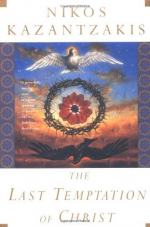
The highly metaphorical nature of the dream scenes also takes some getting used to; fortunately, Kazantzakis uses traditional images (for example, the spirit represented as a bird) to make his points. The jar to one's sensibilities comes once again, though, when one discovers that images of God and those of the devil are the same.
Such daring use of imagery...
|
This section contains 241 words (approx. 1 page at 400 words per page) |
|