 Print
Print Word
Word PDF
PDF|
This section contains 324 words (approx. 1 page at 400 words per page) |

|
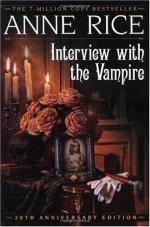
In Interview with the Vampire, Anne Rice mates the old Gothic tradition with a late twentieth-century perspective. Her vampire hero, Louis, bears only a faint resemblance to the Vladimirs and Draculas of old, who were powerful, nefarious beings. Louis belongs to the narcissistic 1970s. He mirrors the self-probing "me-generation" of the past few decades.
Louis constantly questions his morality, his priorities, his feelings, and continues to react like a "sensitive" human being long after his change from life to undeath. Gradually, as the novel unfolds, he realizes that his traffic in blood and violence has totally depleted his treasury of human compassion. He has become a moral cipher who tries to retain a semblance of sensitivity by brooding upon himself and by imitating the extravagant gestures of a man in anguish. Louis's desperate imposture may be a portrait of our selfconscious, self-indulgent times.
Like all vampires...
|
This section contains 324 words (approx. 1 page at 400 words per page) |
|