 Print
Print Word
Word PDF
PDF|
This section contains 599 words (approx. 2 pages at 400 words per page) |

|
Postmodernism
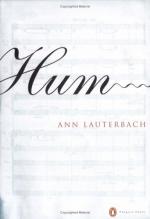
Lauterbach's writing, including Hum, is firmly grounded in the postmodern tradition. Postmodernism evolved primarily after World War II, when writers and artists declined to restrict themselves to the confines of form and structure that had defined artistic expression in previous generations. By definition, postmodernism is a continuation of modernism, which was itself a primarily twentieth-century artistic movement that influenced music, literature, and the visual arts by challenging accepted cultural norms. In terms of poetry, modernism was marked by the work of W. H. Auden, one of Lauterbach's acknowledged influences. The postmodernists continued to develop the avant garde in the arts by becoming even more experimental in their work.
Many postmodernists created works of music, poetry, and painting that were deemed minimalist because of their stripped-down, elemental style. In music, the postmodernist composer John Cage created a composition that does not require any instrument to play a single...
|
This section contains 599 words (approx. 2 pages at 400 words per page) |
|