
Forgot your password?  

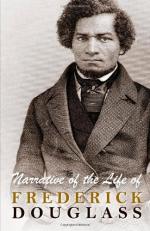
Narrative of the Life of Frederick Douglass, an American Slave, Written by Himself | Quiz

This Study Guide consists of approximately 135 pages of chapter summaries, quotes, character analysis, themes, and more - everything you need to sharpen your knowledge of Narrative of the Life of Frederick Douglass, an American Slave.

Narrative of the Life of Frederick Douglass, an American Slave, Written by Himself | Quiz

Students: Take our free Narrative of the Life of Frederick Douglass, an American Slave, Written by Himself quiz below, with 25 multiple choice questions that help you test your knowledge. Determine which chapters, themes and styles you already know and what you need to study for your upcoming essay, midterm, or final exam. Take the free quiz now!

Teachers: The BookRags Lesson Plan contains hundreds of test and quiz questions, including multiple choice, short answer, and essay questions. Create your own quiz or test with our automatic test generator, or choose from our ready-to-go chapter quizzes, midterm tests, and final exams. Don’t waste time reinventing the wheel, get the Lesson Plan today!

Directions: Click on the correct answer.

1)

What do the slaves produce on the main farm besides tobacco and corn? (from Chapter 2)

Squash.
Potatoes.
Cotton.
Wheat.
2)

Why does Douglass not trust anyone after he escapes? (from Chapter 11)

Because of someone stealing from him when he first became free.
Because of kidnappers who take slaves back to the South.
Because of the years of beatings.
Because he is told by another previous slave that there is slavery in the North, too.
3)

What does Douglass focus on describing in Chapter Three? (from Chapter 3)

The luxuries of slaveholders .
His teenage years.
The punishments slaves endure.
Slave families attempt at staying together.
4)

What stays in Douglass's memory for the rest of his life? (from Chapter 2)

The emotional impact of babies being taken from their mothers.
The images of the slaves being beaten.
The images of slaves being hung.
The emotional impact of the songs the slaves sing.
5)

Why do the slaves say kind words about their masters? (from Chapter 3)

To gain the masters respect.
To gain better living accomadations.
Because they are afraid of being traded away.
To receive more food.
6)

In Chapter Five, why does Douglass not get treated as poorly as the other slaves? (from Chapter 5)

He is liked by the master's wife.
He is too young to work in the fields.
He works an extra hour a day.
He plays with the master's children.
7)

What free state does Douglass escape to? (from Chapter 11)

Maine.
New Jersey.
Michigan.
New York.
8)

Who took in Douglass and his new wife? (from Chapter 11)

John Nathaniel.
Charles Anthony.
Nathan Johnson.
James Andrews.
9)

Who says, "I speak advisedly when I say this,--that killing a slave, or any colored person, in Talbot County, Maryland, is not treated as a crime, either by the courts or the community." (from Chapter 4)

Wendell Phillips.
William Lloyd Garrison.
Daniel O'Connell.
Frederick Douglass.
10)

What does Colonel Lloyd own that takes five men to maintain? (from Chapter 3)

A large food storage building.
A ship.
A garden.
A pool.
11)

What happens to Douglass after he is given to Mrs. Lucretia? (from Chapter 8)

She gives him to Master Andrew.
He moves with her to South Carolina.
He moves with her to North Carolina.
He's sent back to the plantation he just came from.
12)

What is Douglass happy about receiving for his trip to help one of his master's relatives? (from Chapter 5)

His first pair of pants.
A pair of shoes.
A new shirt.
A hair cut.
13)

What is Colonel Lloyd obsessed with? (from Chapter 3)

His hunting dogs.
The care of his horses and carriage.
The running of his farms.
His crops.
14)

Who does Douglass say the slaveholders feel they are protected by? (from Chapter 9)

God.
Town Mayors.
Police.
Lawyers.
15)

According to Douglass, what do the slaves strive for? (from Chapter 2)

To get extra food.
To be the head slave.
To get an additional blanket.
To work at the main farm.
16)

What does Douglass use of Master Thomas's to help him write? (from Chapter 7)

Spelling book.
Notebook.
Newspaper.
History book.
17)

What does the slaveholder use as a way to justify slavery? (from Chapter 9)

Religion.
Slaves need guidance to survive.
Laws.
The need for workers.
18)

Which slaveholders exhibit more morality? (from Chapter 6)

The Lloyds.
The Garrisons.
City slaveholders.
Southern slaveholders.
19)

When were the slaves able to rest on Mr. Covey's farm? (from Chapter 10)

Saturday.
Sunday.
Not very often.
When the slave trainer was sleeping.
20)

Where do Douglass and his new bride go? (from Chapter 11)

New Baltimore.
New Bedford.
New York City.
New Hampshire.
21)

What is a teenage girl in Douglass's own family killed for? (from Chapter 4)

Talking to the masters children.
Feeding the house animals too much.
Not properly cleaning the kitchen.
Falling asleep while babysitting.
22)

What does Douglass trade to learn new written words? (from Chapter 7)

Bread.
A piece of candy.
Paper.
Water.
23)

What does Douglass get to eat as a child on the plantation? (from Chapter 5)

Beans.
Table scraps.
Mush.
Bread.
24)

What does Douglass use to practice his writing? (from Chapter 7)

Quill and ink.
Pencil.
Chalk.
Stick in the dirt.
25)

How many shirts does each working slave get for a year? (from Chapter 2)

Two.
Three.
One.
Five.
Copyrights
Narrative of the Life of Frederick Douglass, an American Slave, Written by Himself from BookRags and Gale's For Students Series. ©2005-2006 Thomson Gale, a part of the Thomson Corporation. All rights reserved.
Follow Us on Facebook
