
Forgot your password?  
Related Topics

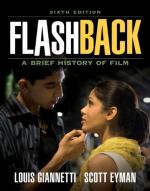
Flashback: A Brief History of Film Quiz

This Study Guide consists of approximately 41 pages of chapter summaries, quotes, character analysis, themes, and more - everything you need to sharpen your knowledge of Flashback.

Flashback: A Brief History of Film Quiz

Students: Take our free Flashback: A Brief History of Film quiz below, with 25 multiple choice questions that help you test your knowledge. Determine which chapters, themes and styles you already know and what you need to study for your upcoming essay, midterm, or final exam. Take the free quiz now!

Teachers: The BookRags Lesson Plan contains hundreds of test and quiz questions, including multiple choice, short answer, and essay questions. Create your own quiz or test with our automatic test generator, or choose from our ready-to-go chapter quizzes, midterm tests, and final exams. Don’t waste time reinventing the wheel, get the Lesson Plan today!

Directions: Click on the correct answer.

1)

What sort of documentaries dominated the filmmaking business in America in the 1940s? (from Flashback: A Brief History of Film Chapters 5-8)

Actor's biographies.
Religious.
Travel.
War.
2)

Which of the following countries was not one of the forerunners of Islamic cinema from the nineties? (from Flashback: A Brief History of Film Chapters 17-20)

Turkey.
Afghanistan.
Iran.
Egypt.
3)

When Britain began to focus on literary and theatrical stage adaptations for their film industry in the years surrounding World War II, what renowned actor became particularly lauded for his work in this area? (from Flashback: A Brief History of Film Chapters 9-12)

Laurence Olivier.
Orson Welles.
Alfred Hitchcock.
Peter Sellers.
4)

In 1947, what did the House of Un-American Activities Committee began to investigate? (from Flashback: A Brief History of Film Chapters 5-8)

Labor laws.
Nazi spies.
The roles of minorities in film.
Communism.
5)

Why did 1950s allow independent filmmakers in America to practice their craft more openly? (from Flashback: A Brief History of Film Chapters 9-12)

Underground artists became mainstream.
Many directors quit the industry after the war.
Film audiences went to television.
The war forced studios to allow low-budget films to flourish.
6)

What was the name of France's sudden revitalization in their film industry in the 1950s? (from Flashback: A Brief History of Film Chapters 9-12)

Golden Era.
New Wave.
Cinema Noir.
Film du Prince.
7)

What was the biggest international hit from the 1990s that came from Eastern Europe? (from Flashback: A Brief History of Film Chapters 17-20)

"4 Months, 3 Weeks, 2 Days."
"Persepolis."
"Nochnoi Dozor."
"No Man's Land."
8)

Who was the director of "Crouching Tiger, Hidden Dragon," a huge, international success in the nineties? (from Flashback: A Brief History of Film Chapters 17-20)

John Woo.
Akira Kurosawa.
Ang Lee.
Yan Po.
9)

From what country did director Ingmar Bergman come? (from Flashback: A Brief History of Film Chapters 9-12)

Germany.
Norway.
Italy.
Sweden.
10)

What was the focus of Italy's films in the years around World War II? (from Flashback: A Brief History of Film Chapters 9-12)

Theatrical adaptations.
Epics.
Neo-realism.
Expressionism.
11)

Which of the following was not one of the main focuses of American cinema in the 1980s? (from Flashback: A Brief History of Film Chapters 13-16)

Nationalism.
Money.
Militarism.
Government corruption.
12)

In America during the late 1960s, what was the general mood of the youth? (from Flashback: A Brief History of Film Chapters 9-12)

Anti-establishment.
Conscientious objectors.
Pro-government.
Severe ennui.
13)

What country nearly wiped out the French film industry after World War II? (from Flashback: A Brief History of Film Chapters 9-12)

Britain.
America.
Italy.
Germany.
14)

Which of the following was not one of the rising directors of independent American films in the nineties? (from Flashback: A Brief History of Film Chapters 17-20)

Christopher Nolan.
The Coen brothers.
Quentin Tarantino.
Cameron Crowe.
15)

How large was the tax on foreign film earning in Britain after World War II? (from Flashback: A Brief History of Film Chapters 5-8)

65%.
55%.
45%.
75%.
16)

In the seventies, upon what did German cinema begin to reflect? (from Flashback: A Brief History of Film Chapters 13-16)

Nazi era.
Sexuality in youth.
Brechtian principles.
Pop culture.
17)

In regards to equality in the workplace, what was significant about American films from the 1990s? (from Flashback: A Brief History of Film Chapters 17-20)

Gender, racial, and sexual barriers began to be broken down.
Minorities in films began to demand better roles.
Discrimination hit an all-time high against homosexuals.
Women were blocked from becoming producers or directors.
18)

What genre of film became particularly popular in the early seventies? (from Flashback: A Brief History of Film Chapters 13-16)

Screwball comedy.
Horror.
Blaxploitation.
Grindhouse.
19)

What did country made a decent splash in the nineties for films, though ended up losing several of their most talented filmmakers and artists to Hollywood? (from Flashback: A Brief History of Film Chapters 17-20)

Russia.
Australia.
Japan.
Mexico.
20)

What Asian city produced martial arts films that became incredibly popular with the international, mainstream audience? (from Flashback: A Brief History of Film Chapters 17-20)

Tokyo.
Hong Kong.
Saigon.
Burma.
21)

During Japan's Golden Age in cinema, what country, previously considered a strong force in cinema, began to decline? (from Flashback: A Brief History of Film Chapters 9-12)

France.
Sweden.
United States.
Britain.
22)

What was significant about cinema in education in the 1970s? (from Flashback: A Brief History of Film Chapters 13-16)

Universities began offering film courses.
Universities opened up their own production companies for the students.
Universities were mined for potential talent.
Films were used as a teaching aid.
23)

Which of of the following was not one of the associate companies of the commercial conglomerates that helped keep the American film industry from floundering in the sixties? (from Flashback: A Brief History of Film Chapters 9-12)

Publishing.
Music.
Theatrical.
Television.
24)

What was the main focus in French cinema in the seventies? (from Flashback: A Brief History of Film Chapters 13-16)

Dialogue.
Plot.
Mood.
Characters.
25)

From what entertainment aspect did Orson Welles tap in order to innovate the ways films were made? (from Flashback: A Brief History of Film Chapters 5-8)

Theater.
Dance companies.
Sound design.
Music.
Copyrights
Flashback: A Brief History of Film from BookRags and Gale's For Students Series. ©2005-2006 Thomson Gale, a part of the Thomson Corporation. All rights reserved.
Follow Us on Facebook
