
Forgot your password?  
Related Topics

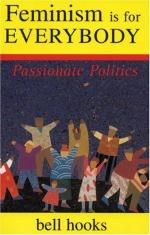
Feminism Is for Everybody: Passionate Politics Quiz

This Study Guide consists of approximately 32 pages of chapter summaries, quotes, character analysis, themes, and more - everything you need to sharpen your knowledge of Feminism Is for Everybody.

Feminism Is for Everybody: Passionate Politics Quiz

Students: Take our free Feminism Is for Everybody: Passionate Politics quiz below, with 25 multiple choice questions that help you test your knowledge. Determine which chapters, themes and styles you already know and what you need to study for your upcoming essay, midterm, or final exam. Take the free quiz now!

Teachers: The BookRags Lesson Plan contains hundreds of test and quiz questions, including multiple choice, short answer, and essay questions. Create your own quiz or test with our automatic test generator, or choose from our ready-to-go chapter quizzes, midterm tests, and final exams. Don’t waste time reinventing the wheel, get the Lesson Plan today!

Directions: Click on the correct answer.

1)

When the cosmetic industry worried feminism would ruin business, how did mass media portray feminists? (from Beauty Within and Without)

As mean and rude.
As stupid and naive.
As intelligent and educated.
As masculine and ugly.
2)

In the end, care must be given not to lose sight of which women, as hooks claims? (from Visionary Feminism)

Poor women.
Poor and black women.
White women.
Ethnic women.
3)

What was the name of the book Betty Friedan wrote? (from Feminist Class Structure)

The Feminine Mystique.
Feminists and Women.
The Feminist Manifesto.
Becoming a Feminist.
4)

Which group seems to be writing the most articles in magazines geared toward women, as witnessed by hooks? (from Beauty Within and Without)

Privileged women.
Women.
Poor women.
Men.
5)

What was the second type of new policy that hooks' claims as creating a new underclass of women and children who suffered as a result of patriarchy? (from Feminist Class Structure)

Public strike laws.
Minimum wage laws.
Welfare assistance.
Dress code policies.
6)

In the 1960s, what fraction of America's women were working? (from Women at Work)

2/3.
1/3.
1/2.
2/5.
7)

Hooks asserted that women could enhance their personal power by breaking away from which of the following ideals? (from Visionary Feminism)

Female subordination.
Men as activists.
Women as housewives.
Male dominance.
8)

Which of the following does hooks claim is a belief inconsistent with feminism? (from Visionary Feminism)

Anti-man belief.
Anti-child belief.
Anti-abortion belief.
Anti-corporation belief.
9)

According to hooks, what did privileged-class white women expect lower classes and blacks to be in the feminist movement? (from Global Feminism)

Watcher.
Leaders.
Obeyers.
Followers.
10)

Betty Friedan's book focused on which type of woman? (from Feminist Class Structure)

Teenagers.
Teachers.
Housewives.
Business women.
11)

Who was stereotyped and broadly given a sexist identity, according to hooks? (from Feminist Masculinity)

White men.
Black men.
Women.
Men.
12)

Hooks proposes that men and women should be given state aid for how long while they pursue a career? (from Women at Work)

2 years.
Less than a year.
1 year.
While they are in college.
13)

Feminist liberation can only be a reality with societal shifts in what field, according to hooks? (from Feminist Class Structure)

Racial elitism.
Class elitism.
Career elitism.
Educational elitism.
14)

According to hooks, who began engaging in sadomasochistic behavior, driving heterosexual women to turn to patriarchal models of sexual freedom? (from Feminist Parenting, Liberating Marriage and Partnership, A Feminist Sexual Politic - An Ethics of Mutual Freedom)

Radical lesbians.
Conservatives.
Feminists.
Men.
15)

Which of the following is a consequence hooks describes as resulting from the fashion industry? (from Beauty Within and Without)

Poor economy.
Causing depression.
Immoral women.
Ruining self-esteem.
16)

What system allows dominance to survive, according to hooks? (from Ending Violence)

Patriarchal system.
Racist sytem.
Capitalist system.
Socialist system.
17)

It did not take women long to recognize that sexual liberation and which of the following were not the same, according to hooks? (from Feminist Parenting, Liberating Marriage and Partnership, A Feminist Sexual Politic - An Ethics of Mutual Freedom)

Promiscuity.
Satisfaction.
Freedom.
Happiness.
18)

According to hooks, who are still socially isolated from each other? (from Race and Gender)

White women and all other women.
Black women and all other women.
Black women and white women.
Hispanic women and white women.
19)

What kind of religions did many feminists look to in the early days of the movement? (from Total Bliss - Lesbianism and Feminism, To Love Again - The Heart of Feminism, Feminist Spirituality)

Christianity.
Eastern religions.
Western religions.
Asian religions.
20)

For feminism to defeat patriarchy, hooks claims that which of the following must be clear and consistent? (from Visionary Feminism)

Romance.
Politics.
Communication.
Education.
21)

What does the word misogyny relate to? (from Global Feminism)

Fear of marriage.
Homophobia.
Racism.
Sexism.
22)

According to hooks, which forms of violence must be fought against? (from Ending Violence)

All forms of violence.
Parent on child violence.
Female on female violence.
Male on female violence.
23)

Hooks describes the conservative solution for the hard life of working women as what? (from Women at Work)

Women working in positions that require high education.
Women working in business settings.
Women staying home.
Women working in their own offices.
24)

Who does hooks claim will feel more entitled to maintain control by any means? (from Ending Violence)

Those who want power.
Those with no power.
Those in power.
Those who can never have power.
25)

Hooks describes which decade as having a resurgence of obsession with appearance? (from Beauty Within and Without)

1990s.
1980s.
2000s.
1970s.
Copyrights
Feminism Is for Everybody: Passionate Politics from BookRags and Gale's For Students Series. ©2005-2006 Thomson Gale, a part of the Thomson Corporation. All rights reserved.
Follow Us on Facebook
