
Forgot your password?  

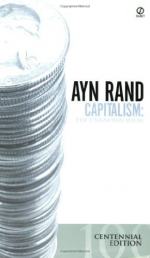
Capitalism, the Unknown Ideal Quiz

This Study Guide consists of approximately 59 pages of chapter summaries, quotes, character analysis, themes, and more - everything you need to sharpen your knowledge of Capitalism, the Unknown Ideal.

Capitalism, the Unknown Ideal Quiz

Students: Take our free Capitalism, the Unknown Ideal quiz below, with 25 multiple choice questions that help you test your knowledge. Determine which chapters, themes and styles you already know and what you need to study for your upcoming essay, midterm, or final exam. Take the free quiz now!

Teachers: The BookRags Lesson Plan contains hundreds of test and quiz questions, including multiple choice, short answer, and essay questions. Create your own quiz or test with our automatic test generator, or choose from our ready-to-go chapter quizzes, midterm tests, and final exams. Don’t waste time reinventing the wheel, get the Lesson Plan today!

Directions: Click on the correct answer.

1)

The existence of money promotes the division of what? (from Gold and Economic Freedom)

Specialties.
Economic classes.
Social classes.
Labor.
2)

Who takes the concept of alienation and applies it to the worker? (from Alienation)

Fengle.
Marx.
Dowd.
Hicks.
3)

The author believes that businessmen take the blame for what? (from Notes on the History of American Free Enterprise)

Government actions.
Capitalism.
Recessions.
Depressions.
4)

Money functions as a __________ in transactions. (from Gold and Economic Freedom)

Easy standard.
Similar currency.
National linkage.
Common denominator.
5)

The author says the Industrial Revolution would never occur under what? (from The Effects of the Industrial Revolution on Women and Children)

A restrained-trade economy.
Statism.
A planned economy.
Communism.
6)

Patents apply to what? (from Patents and Copyrights)

Theoretical knowledge.
Inventions.
Land.
Personal information.
7)

What is the name of the philosopher who introduces the concept of alienation? (from Alienation)

Livingston.
Trumpet.
Jung.
Hegel.
8)

From what point of view is the encyclical written? (from Requiem for Man)

Religious-altruist.
Spiritual-altruist.
Mystic-altruist.
Personal-altruist.
9)

The author feels that the only way to make the industry responsive to the market is to make the airwaves what? (from The Property Status of Airwaves)

Industry-controlled.
Free.
Bought and sold.
Private property.
10)

Railroads are built using government money, and what happens to many of them? (from Notes on the History of American Free Enterprise)

They abuse their workers.
They repay the investors.
They go bankrupt.
They prosper.
11)

McCarthyism is named for a senator from where? (from Extremism, or the Art of Smearing)

Texas.
New Jersey.
California.
Wisconsin.
12)

The author believes that capitalism cannot function with what? (from Theory and Practice)

Slaves.
Uneducated workers.
Subservience.
Individual rights.
13)

The first labor laws aimed at children target those working as what? (from The Effects of the Industrial Revolution on Women and Children)

Factory help.
Chimney sweeps.
Cleaners.
Cooks and servers.
14)

The author believes that society today is headed toward what? (from The New Fascism: Rule by Consensus)

Fascism.
Dictatorship.
Totalitarianism.
Guild socialism.
15)

The existence of money allows people to avoid the problems of ______. (from Gold and Economic Freedom)

Credit.
Savings.
Interest.
Barter.
16)

Who do lobbyists work for? (from The Pull Peddlers)

The special-interest groups.
The businesses.
The individual.
The public.
17)

Critics claim that FDR's New Deal programs were close to whose fascism? (from The New Fascism: Rule by Consensus)

Mussolini's.
Figurio's.
Hitler's.
Napolean's.
18)

How do irrational entities benefit from the United Nations, according to the author? (from The Anatomy of Compromise)

By being dominant of rational entities.
By being subservant to rational entities.
By being associated with rational entities.
By being influenced by rational entities.
19)

William Petersen is a professor of what? (from The Cashing-In: The Student)

Political science.
Sociology.
Psychology.
Government.
20)

Who writes an encyclical that expresses contempt for capitalism? (from Requiem for Man)

Pope Pius VI.
Pope Paul VI.
Pope Peter VI.
Pope Platus VI.
21)

The author believes that licensing the airwaves leads to what? (from The Property Status of Airwaves)

Free speech.
Protection of the consumer.
Protection of the airwaves.
Censorship.
22)

What does the author believe determines the course of history? (from Is Atlas Shrugging?)

Man's ideas.
Man's work.
Man's self-sacrifice.
Man's mistakes.
23)

According to Rand, capitalism is based on what? (from Theory and Practice)

Open borders.
Government interference.
Altruistic principles.
Self-motivation.
24)

Sometimes legislators are open to _______, a fact which bewilders the public. (from The Pull Peddlers)

Re-election.
Attack.
Bribes.
Changing their minds.
25)

What, according to the author, does the gold standard facilitate? (from Gold and Economic Freedom)

Trade and growth.
Trade and production.
Production and sales.
Growth and sales.
Copyrights
Capitalism, the Unknown Ideal from BookRags and Gale's For Students Series. ©2005-2006 Thomson Gale, a part of the Thomson Corporation. All rights reserved.
Follow Us on Facebook
