 Print
Print Word
Word PDF
PDF|
This section contains 506 words (approx. 2 pages at 400 words per page) |

|
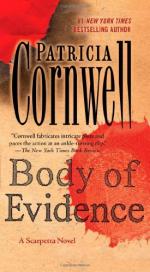
At first glance, Patricia Cornwell's second novel seems to employ the milieu of the classical detective school.
The murder victims are reclusive writers; they live in old and fashionable homes at far remove from the world of everyday crime; they guard unpleasant secrets from their past; their deaths seem to involve a missing manuscript.
These trappings are staples of many novels; Cornwell's American (and Southern) contemporaries Carolyn G. Hart and Joan Hess populated their debut mystery novels with literary types. Cornwell places her work in the genre, then stretches generic boundaries, bringing to this traditional material a hard-boiled mentality, evident in at least six contrasting features. First, Cornwell lingers over the horror of the crime. Agatha Christie and Dorothy Sayers, two of the most renowned classical detective writers, seldom describe death throes or gaping wounds and almost never present graphic struggle. The first victim in Cornwell's...
|
This section contains 506 words (approx. 2 pages at 400 words per page) |
|