
 Print
Print Word
Word PDF
PDF|
This section contains 235 words (approx. 1 page at 400 words per page) |

|
The Baptism Summary & Study Guide Description
The Baptism Summary & Study Guide includes comprehensive information and analysis to help you understand the book. This study guide contains the following sections:
This detailed literature summary also contains Bibliography on The Baptism by Amiri Baraka.
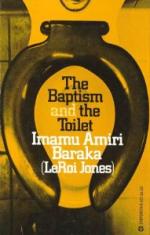
In 1964, the Writers' Stage Theatre in New York City staged the first production of Amiri Baraka's satirical one-act play about religion, The Baptism. The play was presented and published under Baraka's given name, LeRoi Jones. According to Tish Dace and Andrew O. Jones in the Reference Guide to American Literature, the play "jarred and amused its spectators" but also "drew charges of both obscenity and blasphemy." That year, Baraka began garnering attention as a major playwright, with a number of his other plays also opening, including the Obie Award-winning Dutchman. The Baptism was also published in 1967, together with an earlier Baraka play, under the title The Baptism and The Toilet.
The Baptism is a challenging play on a number of levels. For example, some of the language and subject matter is of an adult nature and offensive to some. In addition, the characters are less individuals than they are representations of particular groups or ideas. The play begins with a minister's attempts to encourage a homosexual to change his ways. A boy comes to the church to be baptized, but his sins become a heated topic of discussion, launching angry accusations and a violent end. Throughout the play, the boy's identity remains a question and a source of strife for the other charactersis he simply a clever teenager, skilled at deception, or is he actually some sort of deity, maybe even Christ?
Read more from the Study Guide
|
This section contains 235 words (approx. 1 page at 400 words per page) |
|




