
 Print
Print Word
Word PDF
PDF|
This section contains 216 words (approx. 1 page at 400 words per page) |

|
Babbitt Summary & Study Guide Description
Babbitt Summary & Study Guide includes comprehensive information and analysis to help you understand the book. This study guide contains the following sections:
This detailed literature summary also contains Bibliography on Babbitt by Sinclair Lewis.
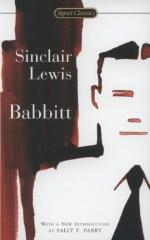
Lewis won the Nobel Prize for Literature in 1930 on the strength of a number of significant works, including Arrowsmith (1925), Elmer Gantry (1927), and Babbitt, a satire of the prosperous and conservative business class of 1920s America. Published in New York in 1922, Lewis's novel follows two years of realtor George F. Babbitt's life, during which Babbitt goes from a lifestyle of complete conformity with the business world, to a period of rebellion including heavy drinking and adultery, and back again to conformity. Throughout this journey, Lewis skillfully highlights the lack of culture in medium-sized American cities during the Prohibition Era, the hypocrisy and corruption of pro-business organizations, and the emptiness in typical businessmen's lives.
Babbitt is more than an embodiment of what is wrong with America, however. He is a vivid and lifelike character searching for meaning in a life dominated by conformity and loneliness. Babbitt tries to rebel in every way he knows until a conservative organization threatens his business because of his new liberal ideas, at which point he falls back into the lifestyle of what Lewis called a "Standardized Citizen." In a society that, today, retains many of the basic values that Lewis attacks, Babbitt's struggle continues to engage readers and expose some of the deepest and most longstanding infirmities of American culture.
Read more from the Study Guide
|
This section contains 216 words (approx. 1 page at 400 words per page) |
|




