
Forgot your password?  
Study Guide
Related Topics

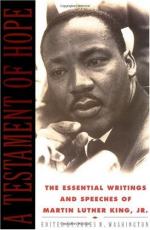
A Testament of Hope: The Essential Writings and Speeches of Martin Luther King, Jr Quiz

This Study Guide consists of approximately 75 pages of chapter summaries, quotes, character analysis, themes, and more - everything you need to sharpen your knowledge of A Testament of Hope.

A Testament of Hope: The Essential Writings and Speeches of Martin Luther King, Jr Quiz

Students: Take our free A Testament of Hope: The Essential Writings and Speeches of Martin Luther King, Jr quiz below, with 25 multiple choice questions that help you test your knowledge. Determine which chapters, themes and styles you already know and what you need to study for your upcoming essay, midterm, or final exam. Take the free quiz now!

Teachers: The BookRags Lesson Plan contains hundreds of test and quiz questions, including multiple choice, short answer, and essay questions. Create your own quiz or test with our automatic test generator, or choose from our ready-to-go chapter quizzes, midterm tests, and final exams. Don’t waste time reinventing the wheel, get the Lesson Plan today!

Directions: Click on the correct answer.

1)

Dr. King proclaimed that ____________ remained the greatest moral quandary for America. (from Bold Design for a New South | The Ethical Demands for Integration)

Nonviolence.
Violence.
Peace.
Prejudice.
2)

Many considered the first phase of the ________ protest to be over and to be a failure, a movement to be viewed with suspicion. (from The Trumpet of Conscience (Book))

Power.
Peace.
Race.
Black Power.
3)

Increased ____________, though still exploited, helped the African American to have better homes, medical care, and schooling. (from The Rising Tide of Racial Consciousness | Equality Now: The President Has the Power)

Economic status.
Rights.
Visibility.
Pity.
4)

Dr. King said that this time was momentous, that a new ____________ was being born during a time which was filled with hope. (from Behind the Selma March | Facing the Challenge of a New Age)

Era.
Disease.
Baby.
Social order.
5)

The plans for the future, said Dr. King, involve the removal of blockage, not pouring _________ over the troubled waters in order to calm them. (from The Time for Freedom Has Come | In a Word: Now)

Cement.
Sand.
Oil.
Fire.
6)

The greatest tragedy of this battle for the integration of African Americans and whites was the denial of __________. (from Give Us the Ballot—We Will Transform the South | If the Negro Wins, Labor Wins)

Money.
The vote.
Church.
Reading.
7)

Black young men were fighting and dying in wars for ____________ they could not get when they were back home. (from The Trumpet of Conscience (Book))

Money.
Truth.
Respect.
Freedoms.
8)

Dr. King addressed in his last conversation the confusion of ________, which was leading to a crisis in the nation. (from Conversation With Martin Luther King)

Economics.
Racism.
Priorities.
Peace.
9)

The riots in __________ were a form of protest, commonly used through the ages, destroying the symbols of things they need. (from Civil Rights No. 1: The Right to Vote | Next Stop: The North)

Portland.
San Francisco.
Boise.
Los Angeles.
10)

A final element in the new sense of dignity for the people was the knowledge that there was a _______________ struggle for freedom and equity. (from The Rising Tide of Racial Consciousness | Equality Now: The President Has the Power)

Religious.
Government.
Worldwide.
Historical.
11)

The nonviolent actions were intended to bring attention to the ______________ affecting the African American population. (from I See the Promised Land | Letter from Birmingham CityJail)

Illnesses.
Dishonesty.
Brutalities.
Moral wrongs.
12)

Achievement of creative _____________ must be continued in order to reach that dream that Dr. King shares. (from The American Dream | I Have A Dream)

Protest.
Understanding.
Laws.
Truths.
13)

The students broke __________ laws, accepting that there were penalties to pay for doing so, and accepting these penalties willingly. (from The Time for Freedom Has Come | In a Word: Now)

All the.
Immoral.
Voting.
No.
14)

Dr. King argued that the war in Vietnam was _________ and that it hurt African Americans more than others in the United States. (from Meet the Press Television Interview | Face to Face)

Immoral.
Blasphemy.
A waste.
Unnecessary.
15)

Dr. King reminded listeners that while God was on their side, a new age of __________ would not arrive on its own. (from Behind the Selma March | Facing the Challenge of a New Age)

Validity.
Peace.
Truth.
Freedom.
16)

Poor white peasants from _________ were given a number of the things which African Americans were not. (from The Drum Major Instinct | Remaining Awak Through a Great Revolution)

Europe.
Asia.
The North.
The South.
17)

In California, the legislature had repealed laws allowing for integrated ________, which then forced African Americans into the ghettos. (from Meet the Press Television Interview | Face to Face)

Housing.
Workplaces.
Schools.
Neighborhoods.
18)

Dissenters and protesters need work toward the health of the _________ of America. (from Our God is marching On! | A Time to Break Silence)

Legal system.
Government.
Soul.
Future.
19)

After two months, the Kennedy administration sent in ___________ to mediate between the city leaders, merchants, and the African American leaders. (from Why We Can't Wait (Book) | Where Do We Go From Here: Chaos or Community?)

Robert Kennedy.
Burke Marshall.
John Kennedy.
George Wallace.
20)

The last conversation with Dr. King was held just ________ days before his assassination. (from Conversation With Martin Luther King)

12.
10.
2.
3.
21)

While the South gained respect, the Northern African American drained its ___________ into their struggle. (from Civil Rights No. 1: The Right to Vote | Next Stop: The North)

Family.
Rights.
Power.
Finances.
22)

Through love of others as humans as well as peaceful protest, Dr. King believed the __________ of hatred and discrimination could be worn away. (from Where Do We Go from Here? | A Christmas Sermon on Peace)

Walls.
Stones.
Words.
Shores.
23)

Americans held onto the dream of all people having a right to _______, liberty and the pursuit of happiness. (from The American Dream | I Have A Dream)

Power.
Voting.
Life.
Truth.
24)

Dr. King believed that the existence of _____________ in a country of wealth was immoral. (from The Drum Major Instinct | Remaining Awak Through a Great Revolution)

Unevenness.
Racism.
Poverty.
Discrimination.
25)

The planning of each ___________ involved great care and planning, never knowing when or where it would end. (from Behind the Selma March | Facing the Challenge of a New Age)

March.
Speech.
Sit in.
Vote.
Copyrights
A Testament of Hope: The Essential Writings and Speeches of Martin Luther King, Jr from BookRags and Gale's For Students Series. ©2005-2006 Thomson Gale, a part of the Thomson Corporation. All rights reserved.
Follow Us on Facebook
