
Forgot your password?  
Related Topics

A Sand County Almanac Quiz

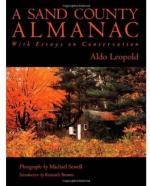
This Study Guide consists of approximately 51 pages of chapter summaries, quotes, character analysis, themes, and more - everything you need to sharpen your knowledge of A Sand County Almanac.

A Sand County Almanac Quiz

Students: Take our free A Sand County Almanac quiz below, with 25 multiple choice questions that help you test your knowledge. Determine which chapters, themes and styles you already know and what you need to study for your upcoming essay, midterm, or final exam. Take the free quiz now!

Teachers: The BookRags Lesson Plan contains hundreds of test and quiz questions, including multiple choice, short answer, and essay questions. Create your own quiz or test with our automatic test generator, or choose from our ready-to-go chapter quizzes, midterm tests, and final exams. Don’t waste time reinventing the wheel, get the Lesson Plan today!

Directions: Click on the correct answer.

1)

What kind of tracks are seen in the painting? (from Chapter 8, August and Chapter 9, September)

There are no tracks in the painting.
Tire tracks.
People tracks.
Animal tracks.
2)

According to the narrator, wilderness for recreation is extremely what? (from Chapter 21, Wilderness)

Overused.
Menacing.
Useful.
Needed by people.
3)

In Adams County, October is the hunting season for what? (from Chapter 10, October)

Grouse.
Geese.
Horned owls.
Ducks.
4)

How do September mornings begin? (from Chapter 8, August and Chapter 9, September)

With prairie dogs barking.
With silence.
With rain.
With birds singing.
5)

What kind of trees do the narrator and dog arrive at during their hunt? (from Chapter 10, October)

Bur Oak.
Willow.
Alders.
Oaks.
6)

A person tells a lot about animals' feeding habits during a season by looking at what? (from Chapter 12, December)

The ground.
The plants.
The tracks.
The animal itself.
7)

What are the fastest shrinking wilderness areas? (from Chapter 21, Wilderness)

Forests.
Grasslands.
Prairies.
Coastlines.
8)

According to the narrator, the land ethic changes the role of humans from conquerors to what? (from Chapter 22, The Land Ethic)

Healers.
Teachers.
Members of the biotic community.
Students.
9)

Who lives in the hollow oak trees? (from Chapter 11, November)

Squirrels.
Coons.
All the above.
Bees.
10)

When is the best time to hunt for grouse? (from Chapter 10, October)

When the weather turns cold.
When the berries turn ripe.
When the tamaracks turn gold.
When the rain starts.
11)

Why does the state start to get rid of wolves? (from Chapter 15, Arizona and New Mexico)

To permit hikers to use the mountains.
Because they cause so many problems.
To allow farmers to raise chickens.
To optimize hunting.
12)

What is the one thing that the narrator believes really kills a chickadee? (from Chapter 12, December)

Weather.
Owls.
Lack of food.
Disease.
13)

Most hunters don't know that the partridge likes to hang around what bush? (from Chapter 10, October)

Raspberry bush.
Blackberry bush.
Cranberry bush.
Blueberry bush.
14)

What is one of the main birds that makes the marshland its home, as the marshes are moving northward to Canada? (from Chapter 17, Oregon and Utah and Chapter 18, Manitoba)

The grebe.
The sandwort.
The spotted warbler.
The grouse.
15)

People tend to ignore song birds that do what? (from Chapter 8, August and Chapter 9, September)

Sing only in the evening.
Sing only part of the time.
Sing long songs.
Sing all the time.
16)

What animal does the narrator kill first with his gun? (from Chapter 14, Illinois and Iowa)

A duck.
An icewart.
A squirrel.
A rabbit.
17)

According to the narrator in Chapter 17, what is accepted as a necessary evil in the northwestern foothills? (from Chapter 17, Oregon and Utah and Chapter 18, Manitoba)

Cheat grass.
Mosquitoes.
Roaming cattle.
Sagebrush.
18)

When does the State Conservation Department begin to rebuild the river? (from Chapter 13, Wisconsin)

1947.
1945.
1943.
1940.
19)

What sport does the narrator think is very corrupt? (from Chapter 20, Wildlife in American Culture)

Deer hunting.
Duck hunting.
Fox hunting.
Fishing.
20)

The narrator believes that the conservation movement is the first step to acknowledging that there is an ecological necessity to establish a code of ethics for the environment and what? (from Chapter 22, The Land Ethic)

Land.
People.
National parks.
Governments.
21)

What animal do the cured oak leaves feed? (from Chapter 11, November)

Wood ducks.
Chickadees.
Coons.
Grouse.
22)

What governmental district does the bus pass through? (from Chapter 14, Illinois and Iowa)

Green River Soil Conservation District.
State Conservation District.
Iowa County Conservation District.
Red River Soil Conservation District.
23)

In 1937, the narrator bands how many chickadees? (from Chapter 12, December)

21.
14.
7.
4.
24)

When does the narrator kill his first partridge? (from Chapter 14, Illinois and Iowa)

In his third hunting season.
In his first hunting season.
In his second hunting season.
In his fourth hunting season.
25)

According to the narrator, how many times does a person view the same painting? (from Chapter 8, August and Chapter 9, September)

Only once.
A limited number of times.
Whenever he wants.
Whenever he comes to the area.
Copyrights
A Sand County Almanac from BookRags and Gale's For Students Series. ©2005-2006 Thomson Gale, a part of the Thomson Corporation. All rights reserved.
Follow Us on Facebook
