 Print
Print Word
Word PDF
PDF|
This section contains 331 words (approx. 2 pages at 300 words per page) |

|
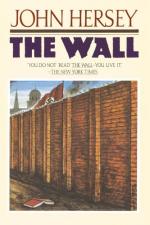
The Wall Summary & Study Guide Description
The Wall Summary & Study Guide includes comprehensive information and analysis to help you understand the book. This study guide contains the following sections:
This detailed literature summary also contains Related Titles on The Wall by John Hersey.
Preview of The Wall Summary:
During World War II John Hersey had been more anti-Japanese than anti-Nazi. He had seen the results of Japanese atrocities before the Americans entered World War II. Visiting Hiroshima, he realized the enormous suffering of civilians, which he documented in his nonfiction book Hiroshima (1946).
In the closing years of the war he also toured the ruins of the Warsaw Ghetto, and the Lodz and Tallin ghettos as well as a detention camp at Klooga, Estonia. The concentration camps, like the fate of the innocent on Hiroshima, represented slaughter on a scale that was beyond imagination. He thought that no novel could adequately capture the horror inflicted on that mass helpless humanity, as he had successfully captured in Hiroshima, now considered a landmark of imaginative journalism. But after witnessing the ghetto and its heroic resistance, he thought that he might recapture the destructive more imaginatively...
|
This section contains 331 words (approx. 2 pages at 300 words per page) |
|