 Print
Print Word
Word PDF
PDF|
This section contains 739 words (approx. 3 pages at 300 words per page) |

|
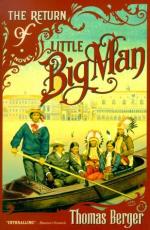
Thomas Berger's long-awaited sequel to his realistic treatment of the history of the West in Little Big Man (1964) again views Native Americans sympathetically, as tragic victims of white imperialism. However, the focus here is on the decline and fall of Native American culture, as embodied in the Lakota protest led by Sitting Bull, with its tragic denouement in his murder. In contrast to the depiction of plains Indian life in Little Big Man—where Jack Crabb was spiritually immersed in Cheyenne culture—Berger now presents the gradual defeat and dissolution of Indian culture, especially in the futility of white efforts to assimilate the Cheyenne and the Lakota peoples into white society. As a result, Berger's comments on the fate of Native American culture tend to have a muted effect, and they subordinate the decline of Native American life to a larger panorama dealing with...
|
This section contains 739 words (approx. 3 pages at 300 words per page) |
|