
 Print
Print Word
Word PDF
PDF|
This section contains 343 words (approx. 2 pages at 300 words per page) |

|
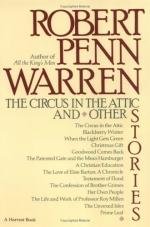
The Circus in the Attic follows in the path of a time-honored American literary tradition of fictional realism, which was in turn influenced by French and English realism (Gustav Flaubert's Madame Bovary, 1857; Emile Zola's novels; Arnold Bennett's The Old Wives Tale, 1908). Numerous stories in the American realistic tradition explore the theme of a "revolt from the village," beginning with Mark Twain and Hamlin Garland's fiction, and continuing through Sherwood Anderson's Wimsburg, Ohio (1919; see separate entry) and Sinclair Lewis's Main Street (1923; see separate entry). Needless to say, many of these fictional revolts are feeble, abortive, or thwarted, as is Bolton Lovehart's in Warren's novella. Ernest Hemingway in his Nick Adams stories, especially some in In Our Time (1924; see separate entry) and William Faulkner in many stories with Southern settings (e.g. "A Rose for Emily") also provided ample precedents for Warren's fine novella.
Other significant precedents may...
|
This section contains 343 words (approx. 2 pages at 300 words per page) |
|