 Print
Print Word
Word PDF
PDF|
This section contains 207 words (approx. 1 page at 300 words per page) |

|
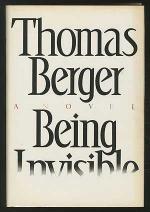
Berger cites two novels as conscious influences on this novel—H. G. Wells's The Invisible Man (1897; see separate entry) and Ralph Ellison's epic novel of black consciousness Invisible Man (1952; see separate entry). Wells depicted invisibility as a daring scientific experiment and used most of his narrative to describe the puzzling events as viewed from the perspectives of normal villagers, police officers, and scientific researchers. Ellison's novel does not employ outright fantasy at all, but uses invisibility as a metaphor for the social situation of the black American before the era of civil rights protests. For Ellison, invisibility is a social and psychological condition. Berger, too, is interested in the symbolic implications of invisibility.
Being Invisible may also owe something to the fiction of James Thurber. Thurber's fiction is populated by shy but creative male protagonists such as Walter Mitty, who spends a day daydreaming of...
|
This section contains 207 words (approx. 1 page at 300 words per page) |
|