
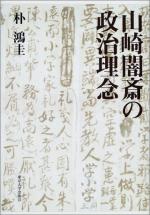
Yamazaki Ansai(1618–1682)
Yamazaki Ansai, the Japanese Confucianist notable for his ethical bent and Confucian rationalization of Shintoism, was raised at Kyoto in a Buddhist monastery. He was so unruly that he was sent to Tosa (now the city of Kōchi) on Shikoku Island, where he came under the influence of Tani Jichu (1598–1649), the originator of the southern branch of the Zhu Xi school of Confucianism in Japan. Having discarded Buddhism, Yamazaki taught Zhu Xi Confucianism in Kyoto and Edo (Tokyo) from 1648. Uncompromising in character, he condescended in 1665 to become the official scholar of Hoshina Masayuki, lord of Aizu (in northeast Japan). At Hoshina's death in 1672 Yamazaki returned to Kyoto and developed his Confucian Shintoism.
Though a stern Confucianist teacher he gathered around him more than six thousand students; among the best were Asami Keisai (1652–1711), Satō Naokata (1650–1719), and Miyake Shōsai (1662–1741). They formed the Kimon or Ansai school. However, Yamazaki's Shintoism held the seed of disharmony; before his death this school split into four. He urged the ethical formula keinai gigai, that is, "Devotion within, righteousness without." By "devotion" he meant not simply Confucian self-cultivation but rather a religiously rectified mind related to cosmic reason. By "righteousness" he meant virtue toward others. His maxim, "Learning is knowing and practice," suggests a middle way between overemphasis on mastery of the mind and overemphasis on social virtues.
Yamazaki's Shintoism deserves attention because of its Confucian rationalism and the influence it had in the revival of Shintoist studies in Japan. It is called Suika Shintō and elaborates on Confucian cosmogony to explain Japan's mythological creation chronicles. Trying to see a rational core in these legends, he developed the Shinto creed, borrowing from neo-Confucianism. His best pupils, however, did not follow him in his Shintoist phase; and the kokugakusha, the "national learning scholars," did not become the purveyors of a rationalized Shintoism. His most lasting impact was made through his popularization of Confucian ethics and indirect fostering of loyalism toward the emperor. This last trend was exemplified in Asami Keisai, Yamagata Daini, and in the school of Mito historians. Yamazaki is, however, given credit for later loyalist and nationalist trends.
Buddhism; Chinese Philosophy; Confucius; Japanese Philosophy; Loyalty; Nationalism; Rationalism; Virtue and Vice; Zhu Xi (Chu Hsi).
Bibliography
For Japanese sources, see Yamazaki Ansai zenshu (Yamazaki Ansai: complete works), 5 vols. (Nagoya: Hatsubaijo Matsumoto Shoten, 1937), and Bitō Masahide, Nihon hōken shisōshi kenkyu (Studies on the history of feudal thought in Japan; Tokyo, 1961), pp. 40–99. An English source is W. T. de Bary, Ryusaku Tsunoda, and Donald Keene, eds., Sources of Japanese Tradition (New York: Columbia University Press, 1958), pp. 363–371.
This is the complete article, containing 437 words
(approx. 1 page at 300 words per page).

