Weather
Weather refers to the atmospheric conditions at a certain time or over a certain short period in a given area. It is described by a number of meteorological phenomena which include atmospheric pressure, wind speed and direction, temperature, humidity, sunshine, cloudiness, and precipitation.
The effects of weather are felt by all life forms on Earth, and weather is also a major contributor in shaping Earth's lithosphere (surface crust). The impact of weather is most pronounced during the occurrence of extreme weather situations, such as prolonged periods of heat, cold, rain, drought and smog conditions. In addition shorter but intense events such as hurricanes, tornadoes, winter blizzards, freezing rain, and floods also produce often dramatic effects on both the social and geologic landscape. The concern to reduce the impact of weather on public health and property provides an important motivation for the continued efforts by meteorologists and scientists to improve weather forecasting.
The study of meteorological phenomena is an important component in the development of chaos theory. Chaos theories are used to study weather-related complex systems in which, out of seemingly random, disordered processes there arise new processes that are more predictable. In 1956, Edward Lorenz, a professor of meteorology at the Massachusetts Institute of Technology was studying the numerical solution to a set of atmospheric models. Lorenz discovered that his set of model atmospheric equations was very sensitive to their initial conditions. Lorenz named this phenomenon the butterfly effect and suggested that, in the mathematical extreme, the flapping of a butterfly's wings in Kansas might be determined to be responsible for a monsoon in India a month later.
Most of the weather elements on which weather forecasting is based cannot be seen directly, they can only be observed by the effects they create. For the most part weather variables are measured and recorded by instruments. For example, air seems to be without substance, yet it subjects everything to considerable pressure. At sea level, the atmosphere exerts approximately 15 lb per square inch (about 1 kg per square cm) of pressure. The standard instrument used to measure atmospheric pressure is the mercury barometer. The physics for the barometer dates to the classic experiments performed for the first time in 1643 by the Italian scientist Evangelista Torricelli. (A column of mercury is held in a closed glass tube, then inverted and immersed into a mercury dish. The weight of the column is thus balanced by the atmospheric pressure and the length of the column affords a measure of that weight. The mean atmospheric pressure at sea level is 760 mmHg or 1,013 millibars. Pressure as well as air density decrease with increasing altitude, and barometric pressure will rise or fall as a function of different weather systems. On weather maps, points of equal pressure are represented by isobars.
Wind, by its broadest definition, is any air mass in motion relative to Earth's surface. It is predominantly a horizontal movement. However, localized vertical air motion, updraft or downdraft, also occurs, for example, as in storms. Wind is described by two quantities, speed and direction. Wind velocity as measured by the anemometer is reported in mi/hr, knots, m/sec or km/hr. The wind direction is given by the compass bearing from which the wind blows, for example, a southerly wind blows from the south. The horizontal air movement near Earth's surface is controlled by four forces: the pressure gradient force, the Coriolis force, the centrifugal force, and the frictional forces. The existence of barometric differences in the atmosphere sets up the pressure gradient force which causes air to move from a higher to a lower pressure area. The Coriolis force is the apparent deflection of air mass caused by the rotation of Earth, and it was named after the French mathematician Gaspard-Gustave de Coriolis who developed the concept in 1835. Because of Earth's rotation, there is an apparent deflection of all matter in motion to the right of their path in the northern hemisphere, and to the left in the southern hemisphere. Air from near the equator is thus deflected eastward as it moves toward a low pressure area. This provides the cyclonic counterclockwise rotation of the air around lows in the northern hemisphere. The Coriolis force counteracts the pressure gradient force as it is pulling in the diametrically opposite direction. The perfect balance of these two forces results in air traveling parallel to isobars at a constant speed, and the wind of this idealized scenario is called the geostrophic wind. As for the centrifugal force, it influences wind speed when the motion follows a curved path. The main effect of frictional forces, which exist between the moving air layer and the land and ocean surfaces, is to modify the direction and speed of wind.
Temperature and humidity are crucial in defining the origins and types of air masses. The thermal properties of an air mass are determined by its latitudinal position on the globe, and its moisture content depends on the underlying surface, be it land or water. For example, polar air is cold and dry, whereas tropical air is hot and humid. In essence, it is the convergence of these two types of air masses which is responsible for most global weather activities. The clash of these contrasting air masses leads to the formation of frontal wave depressions moving in an oscillating west-east pattern and steered by the upper-air jet stream. Hot, humid tropical air is also the source material that fuels the devastating force of hurricanes. Across the network of weather stations, readings of temperature and humidity are taken at regular intervals. Standard equipment in an instrumentation shelter consists of a dry and a wet bulb thermometer, and readings from the latter are used to establish the dew point. A pair of special thermometers measures the maximum and minimum temperatures occurring during day and nighttime. The hygrometer measures the relative humidity of the air. In fully automated stations, electronic sensors measure and transmit weather information.
In addition to temperature and humidity, daily weather forecasts inform the public about the heat index during summer and about the wind chill index during the winter. These indicators warn about the possible dangers to human health resulting from exposure to summer heat and winter cold. By combining temperature and humidity, the heat index gives a measure of what temperatures actually feel like. In terms of human health, an increased heat index corresponds to physical activity being more exhausting, resulting in possible heat related illnesses, cramps, exhaustion, or heatstroke. By contrast, the wind chill factor relates the risk of cold to exposed skin, which may lead to frostbite and hypothermia. The wind chill factor takes into account the effect of windspeed on temperature. For example, a temperature of 20°F at a windspeed of 20 mph will feel like -10°F. Humidity is the one factor which not only creates weather activity, but also makes life on Earth possible. Water exists in either one of the following three phases: vapor, liquid, or ice. Water vapor, the invisible gaseous form of water, is always present in the atmosphere; it is defined as the partial pressure of the atmosphere and therefore, like air pressure, it is measured in mmHg. Water vapor supplies the moisture for dew and frost, for clouds and fog, and for wet and frozen forms of precipitation.
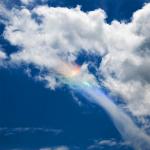
The visible weather elements are, of course, sunshine, clouds and precipitation. Traditionally, the forecasting of weather was mainly based on the observation of clouds, because their size, shape and location are the visible indicators of air movement and of changes in water going from vapor to liquid or ice. The first important contribution to the classification of clouds was made in 1802-03 by the Englishman Luke Howard. Based on his observations, clouds were grouped according to three basic shapes: cumulus (heaps), stratus (layers), and cirrus (wispy curls). He also attached the term nimbus to clouds associated with precipitation. From this basic scheme has evolved the modern classification system of clouds by which the lower ten miles of the atmosphere are divided into three layers of clouds characterized by their water phase, i.e., low clouds consisting of water droplets, middle clouds containing a mixture of water droplets and ice crystals, and high clouds entirely made up of ice crystals. While some types of clouds are confined to one layer, such as stratus, stratocumulus and smaller type cumuli in the lower layer, altocumulus and altostratus in the middle layer, and cirrus and cirrostratus in the higher layer, other types can occupy two layers, namely, the nimbostratus and the swelling cumulus cloud which can reside in both lower and middle layers, as well as the cirrocumulus found in the middle and higher layers. A third type can expand through all three layers, such as the huge cumulus congestus cloud and, of course, the mighty cumulonimbus with its characteristic anvil.
Warm and cold fronts are also distinct in their cloud cover. The first signs of an approaching warm front are the cirrus and cirrostratus clouds, followed by the obscuring altostratus and the thick nimbostratus with continuous precipitation, and occasionally with the formation of patches of stratus clouds. After the passage of the warm front, precipitation ceases and the cloud cover breaks up. The typical cloud of cold fronts is the cumulonimbus and, depending on the instability of the air, nimbostratus. Precipitation will vary from brief showers to heavy, prolonged downpours with thunder and lightning.
The weather's immediate impact on public health has been demonstrated numerous times by severe events like hurricanes, tornadoes, floods, snow and icestorms, and prolonged periods of extreme heat or cold. In past years, considerable research efforts have been deployed to gain a better understanding of the physics of hurricanes and tornadoes. Better forecasting the path of severe weather systems and broadcasting early warnings have helped decrease the occurrence of weather-related deaths and injuries. Concerns are now increasingly focused on the weather's indirect influence on human health. It has been observed that certain weather situations provide conditions which will, for example, foster the proliferation of insects and consequently the spread of disease. This was the case in 1999 in the eastern regions of the United States, where weeks of drought and heat created the perfect breeding conditions for mosquitoes carrying a type of encephalitis virus. Weather conditions can also heighten the effects of pollution, for example, air pollutants trapped in fog or smog may cause severe respiratory problems. The interrelationship of weather and environmental health issues lends urgency for more meteorology research in order to develop the accurate forecasting capabilities required to lower the impact of adverse weather on public health.
This is the complete article, containing 1,760 words
(approx. 6 pages at 300 words per page).

Weather article
Copyrights
Weather from World of Physics. ©2005-2006 Thomson Gale, a part of the Thomson Corporation. All rights reserved.