 Print
Print Word
Word PDF
PDF|
This section contains 6,385 words (approx. 22 pages at 300 words per page) |

|
by Athol Fugard
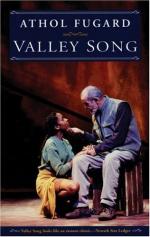
Born in 1932, Athol Fugard grew up to become the most renowned playwright of South Africa. His career spans four decades of the turbulent history of that racially divided country, during which his plays have made powerful pleas for racial equality and harmony in a land torn by intolerance, resentment, and discrimination. Fugard was the child of a mixed marriage of sorts; although his parents were both white, his father was of British descent while his mother was Afrikaner (refers to whites primarily of Dutch descent). Born in the Karoo, the isolated, semidesert farmland in which Valley Song is set, Fugard was raised in Port Elizabeth. Despite brief stints in larger cities, and despite worldwide fame, Port Elizabeth has remained his home. His adult years have seen the dismantling of the apartheid policy of racial segregation in South Africa. Fugard has since continued to...
|
This section contains 6,385 words (approx. 22 pages at 300 words per page) |
|