Forgot your password?  

Not What You Meant?  There are 10 definitions for Chaika.

Valentina Tereshkova | Research & Encyclopedia Articles

Print-Friendly   Order the PDF version   Order the RTF version
About 4 pages (1,042 words)
Valentina Tereshkova Summary


Valentina Tereshkova

Born March 6, 1937,
Maslennikovo, Russia

Valentina Tereshkova

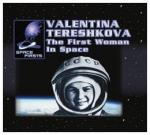
Until she was 25 years old, Valentina Vladimirovna Tereshkova lived quietly as a factory worker and skydiving enthusiast in the Russian city of Yaroslavl. Her life was transformed in 1962, when she entered the Soviet cosmonaut training program and went on to become the first woman to fly in space. From humble beginnings, she was thrust into stardom by a quirk of fate.

Tereshkova was born on March 6, 1937, in Maslennikovo, a village near the Russian city of Yaroslavl. Her father, who was killed in action during World War II, had been a tractor driver on a collective farm in Maslennikovo. After her father’s death she moved to Yaroslavl, where her mother found work in a textile factory and where Tereshkova started school in 1945. At age 16 Tereshkova went to work in the Yaroslavl tire factory while continuing her studies at night school. In 1955 she took a job as a loom operator at the Red Canal Cotton Mill and enrolled in correspondence courses at a technical school.

Interest in parachuting

At this time Tereshkova became interested in parachuting as a hobby, making her first jump in May 1959 and founding a parachute club at her factory. Although she once landed in the Volga River and nearly drowned, she did not give up and ultimately accomplished 126 successful jumps. She also progressed professionally and politically. By 1961 she was a spinning machinery technician and secretary of the local Communist Youth League. That same year she pursued her fascination with spaceflight, which had begun with the Soviet Union’s first successful unmanned space launch, the Vostok 1, in May 1960.

Tereshkova was so enthusiastic when Yury Gagarin (see entry) made the first manned spaceflight in April 1961 that she wrote a letter to the Soviet Space Commission asking to be considered for cosmonaut training. The commission filed her letter along with several thousand others. In early 1962, however, Soviet leader Nikita Khrushchev decided that the country could score a public relations coup against its space rival, the United States, by sending a woman into space. At that time the United States did not accept women for astronaut training and, in fact, would not initiate a program for women for another 20 years. At Khrushchev’s urging, the commission reviewed the letters it had received the previous year. On February 16, 1962, Tereshkova and four other Soviet women were chosen for cosmonaut training.

First female cosmonaut

For the first woman in space, Khrushchev wanted to choose an ordinary Russian worker, not one of the many highly skilled Soviet women who worked as scientists or airplane pilots. Tereshkova, with her background as a factory worker and amateur parachutist, was the ideal candidate. When the Soviet Space Commission notified her that she had been selected, she was instructed not to tell her friends or family what she would be doing. Instead, she was to say she had been selected for a women’s precision skydiving team. She immediately entered an intensive training program at the Baikonur space center, which involved working in a centrifuge and an isolation chamber, functioning under weightless conditions, and making parachute jumps in a space suit. She also received jet pilot training. Since Tereshkova had no scientific experience, she reportedly had difficulty with space technology, but she applied herself to the course and eventually mastered it.

Tereshkova may not have been the initial choice for the first female cosmonaut. There is some speculation that she was originally selected as the backup pilot to another female cosmonaut who was later disqualified for medical reasons. In any case, Tereshkova was aboard the Vostok 6 rocket when it was launched shortly after noon on June 16, 1963, as part of a joint spaceflight with the Vostok 5 rocket. The Vostok 5, with Valeri Bykovsky on board, had been launched two days earlier. This was the Soviet Union’s second joint spaceflight. In August 1962 cosmonauts Andriyan Nikolayev and Pavel Popovich had flown in two rockets, one trailing the other by a few miles in a single orbit. Bykovsky and Tereshkova, however, were launched into two totally separate orbits that ranged from being only three miles apart to as many as several thousand miles apart.

Bykovsky’s and Tereshkova’s activities provide insight into early spaceflight. They conversed with one another and relayed television pictures back to Earth. Tereshkova carried out a series of physiological tests as part of a continuing effort to learn about the effects of weightlessness and space travel on humans. When she experienced some seasickness, the European and American press reported she had been violently ill. Actually, she reacted so well that the flight, which had originally been scheduled for one day, was expanded to three days. Tereshkova landed after 2 days, 22 hours, and 50 minutes in space. In order to return to Earth, Tereshkova fired the retro-engine to brake the rocket. As the space capsule reentered the atmosphere, flames caused by atmospheric friction surrounded the capsule, which then stabilized under a small parachute. Tereshkova was ejected through the side hatch and landed in a regular aviation parachute.

Publicity tours and political career

Tereshkova’s successful flight made her an immediate celebrity. Upon landing she was whisked to Moscow to deliver an address to an International Women’s Peace Congress. She was then scheduled for an exhausting round of personal appearances that required her to travel around the world making speeches on spaceflight and the international role of women. Yet she had time to resume her personal life, renewing her friendship with fellow cosmonaut Andriyan Nikolayev, whom she had met during the training program. They were married on November 3, 1963, in Moscow in a nationally broadcast ceremony presided over by Khrushchev. In June 1964 Tereshkova and Nikolayev had a daughter, whom they named Valentina. Over the years, however, the couple grew apart, and in June 1983 a Soviet news service announced their divorce.

Tereshkova continued her publicity appearances and official functions. She was elected as a member from Yaroslavl to the Supreme Soviet in 1967 and served on the council of the Supreme Soviet from 1966 to 1970 and from 1970 to 1974. In 1974 she was elected to the presidium, or executive committee, of the Supreme Soviet, an important position that she held until 1991.

This is the complete article, containing 1,042 words (approx. 3 pages at 300 words per page).

More Information
  • View Valentina Tereshkova Study Pack
  • 10 Alternative Definitions
  • Search Results for "Valentina Tereshkova"
  • More Products on This Subject
    Valentina Tereshkova
    Valentina Tereshkova (born 1937) was the first woman in space, orbiting the earth 48 times in Vosto... more

    Tereshkova, Valentina
    In 1963 Valentina Tereshkova became the first woman to fly into space. Russian Cosmonaut and... more


    Ask any question on Valentina Tereshkova and get it answered FAST!
    Answer questions in BookRags Q&A and earn points toward
    discounted or even FREE Study Guides and other BookRags products!
    Learn more about BookRags Q&A
    Copyrights
    Valentina Tereshkova from Explorers and Discoverers. ©2005-2006 by U•X•L. U•X•L is an imprint of Thomson Gale, a division of Thomson Learning, Inc. All rights reserved.

    Join BookRagslearn moreJoin BookRags

    Join BookRagslearn moreJoin BookRags