 Print
Print Word
Word PDF
PDF|
This section contains 6,574 words (approx. 22 pages at 300 words per page) |

|
Introduction
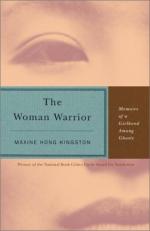
Maxine Hong Kingston's The Woman Warrior: Memoirs of A Girlhood Among Ghosts is one of the first texts to use autobiography to voice concerns about issues in the Asian American community. It is considered one of the most seminal works of the 1970s. An instant bestseller upon publication, The Woman Warrior received the 1976 National Book Critics Circle Award and became one of the top ten nonfiction books of the decade.
Kingston's narrative combines myth and memory, sometimes alternating between the two. She borrows ancient images of Asian war and conflict to trace the evolution of her own perspective and show how it clashes with the perspectives of her mother and other Chinese immigrants. Written in the first person, The Woman Warrior...
|
This section contains 6,574 words (approx. 22 pages at 300 words per page) |
|