Forgot your password?  


The Playboy of the Western World | Research & Encyclopedia Articles

Print-Friendly   Order the PDF version   Order the RTF version
About 23 pages (6,862 words)
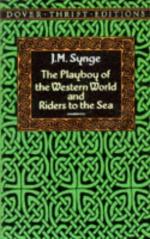
The Playboy of the Western World Summary

Purchase our The Playboy of the Western World


The Playboy of the Western World

by John Millington Synge

John Millington Synge was born in 1871, to an Irish Protestant family in Rathfarnham, near Dublin. As a young man, he left Ireland for the Continent and spent several years in Germany and France, studying various literatures and trying his hand at poetry and the essay. In Paris in 1896, his path crossed with that of another aspiring Irish writer, the poet William Butler Yeats. This meeting has become famous: as Yeats recounts in his “Autobiographical Writings,” he encouraged Synge to abandon his rather moody and bohemian literary lifestyle in France and return to Ireland to rediscover the language and the folk culture that survived among the rural peasantry, and among the population of the Gaelic-speaking Aran Islands in particular (Yeats in Finneran, p. 293). Synge spent many summers in the west of Ireland getting to know the stories, songs, and social mores of the country people. As Synge writes in the introduction to The Playboy of the Western World, listening to the gossip of the servant girls through the chink in the floorboards of a house in county Wicklow brought him “more aid than any learning could have given” (Synge, “Preface,” The Playboy of the Western World, p.

This page contains 201 words.

Purchase our The Playboy of the Western World article The Playboy of the Western World article
Read the rest of this article.
This article contains 6,862 words (approx. 23 pages at 300 words per page).
Ask any question on The Playboy of the Western World and get it answered FAST!
Answer questions in BookRags Q&A and earn points toward
discounted or even FREE Study Guides and other BookRags products!
Learn more about BookRags Q&A
Copyrights
The Playboy of the Western World from World Literature and Its Times. ©2008 Thomson Gale, a part of the Thomson Corporation. All rights reserved.