 Print
Print Word
Word PDF
PDF|
This section contains 11,212 words (approx. 38 pages at 300 words per page) |

|
Introduction
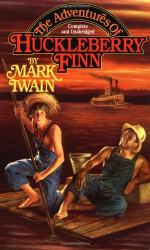
Mark Twain's classic The Adventures of Huckleberry Finn (1884) is told from the point of view of Huck Finn, a barely literate teen who fakes his own death to escape his abusive, drunken father. He encounters a runaway slave named Jim, and the two embark on a raft journey down the Mississippi River. Through satire, Twain skewers the somewhat unusual definitions of "right" and "wrong" in the antebellum (pre-Civil War) South, noting among other things that the "right" thing to do when a slave runs away is to turn him in, not help him escape. Twain also paints a rich portrait of a the slave Jim, a character unequaled in American literature: he is guileless, rebellious, genuine, superstitious, warmhearted, ignorant, and astute all at the same time.
The book is a sequel...
|
This section contains 11,212 words (approx. 38 pages at 300 words per page) |
|