 Print
Print Word
Word PDF
PDF|
This section contains 6,005 words (approx. 21 pages at 300 words per page) |

|
by Okot pBitek
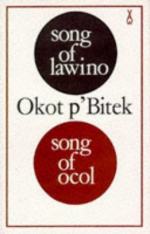
Among Africas most celebrated poets, Okot pBitek is also among the continents most idiosyncratic writers. Between his birth in 1931 and his death in 1982, pBitek was a choirboy, a soccer player, an anthropologist, director of Ugandas national cultural center, and a teacher, in addition to his more famous roles as poet and essayist. pBitek is also unusual for the degree to which he rejected the European influence on Africa. He rejected the Christian faith of his parents in the early 1960s, and wrote his most famous works in his native Acoli rather than in English. His essays ruthlessly critique Africans who have fallen under the spell of such European ideas as Christianity or socialism. His scholarly work provides a deeply sympathetic defense of Acoli culture. Both of...
|
This section contains 6,005 words (approx. 21 pages at 300 words per page) |
|