 Print
Print Word
Word PDF
PDF|
This section contains 3,930 words (approx. 14 pages at 300 words per page) |

|
by E. L. Doctorow
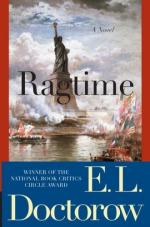
Although E. L. Doctorow sets his novel in an era that preceded his own by some seventy- five years, many of the issues addressed in Ragtime remain similar to those faced by members of American society in the mid- 1970s. The novel focuses on social change based primarily on two early twentieth century movements- progressivism and radicalism. Through historical and fictional characters alike, Doctorow examines America's reaction to different forms of social evolution.
Events in History at the Time the Novel Takes Place
The Progressive movement. The Progressive movement was a campaign for economic, political, and social reform that swept through the United States at the turn of the twentieth century. From its genesis during a nationwide depression in 1893, the Progressive movement's leaders battled to bring change to American life up until the country's entry into World War I in 1917. With the rise of...
|
This section contains 3,930 words (approx. 14 pages at 300 words per page) |
|