
 Print
Print Word
Word PDF
PDF|
This section contains 2,339 words (approx. 8 pages at 300 words per page) |

|
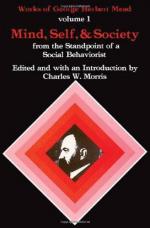
George Herbert Mead, the American pragmatist philosopher, was born in South Hadley, Massachusetts. He received his BA from Oberlin College in 1883 and did graduate work at Harvard in 1887–1888, where he studied under Josiah Royce and William James. From 1888 to 1891 he studied psychology and philosophy in Europe. He was married in 1891 and in the same year was appointed instructor at the University of Michigan. In 1892 he joined the staff of the University of Chicago and later became chairman of its philosophy department.
A major figure in American pragmatism, Mead has also had a large influence on psychologists and social scientists. Many thinkers, including Alfred North Whitehead and John Dewey, regarded Mead as a creative mind of the first magnitude. He published relatively few papers, however, and died before he was able to develop his many original ideas into an integrated philosophy. Large segments...
|
This section contains 2,339 words (approx. 8 pages at 300 words per page) |
|



