
 Print
Print Word
Word PDF
PDF|
This section contains 3,961 words (approx. 14 pages at 300 words per page) |

|
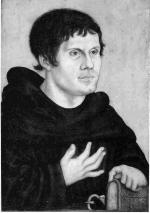
Martin Luther, the German theologian and leader of the Protestant Reformation, was born at Eisleben, Saxony. His father came of peasant stock, but established himself during Luther's boyhood as a successful copper miner in Mansfeld. From 1501 to 1505 Luther attended the University of Erfurt, and then, at his father's wish, he began the study of law; but a spiritual crisis, occasioned by a violent thunderstorm, induced him to enter the Erfurt monastery of the Augustinian Friars. Despite conscientious and even overscrupulous attention to his monastic duties, Luther was obsessed by dread of God's anger, and his superior tried to direct the young man's energies and undoubted ability into a scholar's calling. From 1512 he was biblical professor at the new University of Wittenberg, a position he held, despite interruptions, until his death.
Theological Development
Three stages may be distinguished in Luther's theological development. Between 1512 and 1517, and...
|
This section contains 3,961 words (approx. 14 pages at 300 words per page) |
|



