
 Print
Print Word
Word PDF
PDF|
This section contains 2,123 words (approx. 8 pages at 300 words per page) |

|
Overview
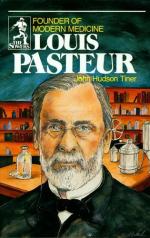
In 1800 the origins of infectious diseases were unknown and as mysterious as they had been in the Middle Ages. By 1900 the causes of many of these diseases that ravaged humans throughout history had been discovered, and methods such as vaccination and improved sanitation were being developed to deal with them. The main figure in this achievement was Louis Pasteur (1822-1895), a French scientist who first demonstrated the crucial role microbes (microscopic organisms) play in the life process. He established the germ theory of disease and was the first to show that vaccines against infectious diseases can be manufactured. Vaccinations against viral diseases, antibiotics, infection-free surgery, safe milk and food, effective sanitation systems: all these developments owe much to Pasteur, the founder of modern microbiology (the...
|
This section contains 2,123 words (approx. 8 pages at 300 words per page) |
|



