BookRags.com Literature Guides Literature Guides Criticism/Essays Criticism/Essays Biographies Biographies My Bibliography Periodic Table U.S. Presidents Shakespeare Sonnet Shake-Up
Research Anything:        
History | Encyclopedias | Films | News | Create a Bibliography | More... Login | Register | Help
Not What You Meant?  There are 20 definitions for HST.  Also try: Hubble.


Hubble Space Telescope

Print-Friendly  Order the PDF version  Order the RTF version
About 2 pages (644 words)
Hubble Space Telescope Summary

Bookmark and Share

Hubble Space Telescope

One of the unavoidable problems facing ground-based telescopes if a phenomenon astronomers call seeing: distortions of the image of a celestial object by the passage of its light through Earth's turbulent atmosphere. This the same phenomenon that causes stars to twinkle, and if the seeing is very poor, astronomical observations can be ruined. Above the atmosphere, seeing is eliminated, and the potential for top-quality observations is enormous.

The advantage of observing objects from above the atmosphere was realized by astronomers long before the launch of the Russian satellite Sputnik 1 ushered in the space age. It was not until the 1970s, during the latter phases of the Apollo Moon program, that the Large Space Telescope, as it was then called, came under serious development by the National Aeronautics and Space Administration (NASA) in cooperation with the European Space Agency (ESA).

Integral to the deployment and servicing of the Space Telescope was the Space Shuttle. NASA engineers realized the telescope would require servicing, and the initial plan was for the Space Shuttle to retrieve it every five years for major servicing, with intermittent in-orbit servicing as needed. The extremely high precision of the telescope, however, coupled with the stresses it would encounter during launch and landing, led designers to scrap the idea of ever returning it to Earth. The telescope would be serviced in orbit by the Shuttle as needed, but once launched, it would remain launched for the duration of its 15-year lifetime.

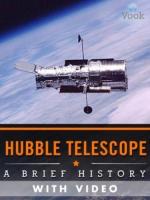
With launch scheduled for 1986, NASA and ESA moved ahead rapidly on building the telescope, now renamed the Hubble Space Telescope (HST). Naming the instrument in honor of Edwin Powell Hubble, who pioneering our understanding of the expansion of the Universe, was appropriate. With its unique capability to see to the farthest reaches of the Universe unhindered by atmospheric turbulence, one of the HST's main observational goals would be to examine some of the issues Hubble and his colleagues had been unable to solve from the ground. To support HST's operations, the Space Telescope Science Center was constructed at the campus of the Johns Hopkins University in Baltimore, Maryland, in the mid 1980s.

The Space Telescope program suffered a severe setback on January 28, 1986, with the explosion of the Space Shuttle Challenger. The ensuing shutdown of the shuttle program meant that HST was grounded until NASA decided it was safe to fly the shuttles once more. Finally, on April 25, 1990, the space shuttle Discovery placed the Hubble Space Telescope in orbit around Earth.

Before long, NASA was faced with one of its most embarrassing moments. The 2.4-meter (90-inch) primary mirror of the HST was discovered to suffer from spherical aberration, a defect resulting from an imperfect shape of the mirror that smeared what should have been crystal-clear images into much larger, fuzzy blurs. The telescope was still able to do some impressive research, but some of the critical observations of very distant, very faint objects were no longer feasible. Amid squeals of delight from political cartoonists (who were able to draw such things as the Space Shuttle deploying an enormous pair of eyeglasses in front of the telescope), the problem was eventually pinpointed. Making the best of an awful situation, NASA engineers designed a set of corrective optics for HST, called the Corrective Optics Space Telescope Axial Replacement (COSTAR), and in December 1993, the crew of the space shuttle Endeavour installed the new optical elements, fixing the problem and restoring HST to full functionality.

HST is armed with a formidable array of instruments, including its imaging camera, an ultraviolet spectrograph, and the Faint Object Camera (FOC), which enjoys the benefits of the COSTAR-corrected images and is able to perform the full set of original mission objectives. A large number of professional astronomers have observed with the HST, through a standard process of application for observing time and selection of the most competitive proposals.

This is the complete article, containing 644 words (approx. 2 pages at 300 words per page).

More Information
  • View Hubble Space Telescope Study Pack
  • 20 Alternative Definitions
  • Search Results for "Hubble Space Telescope"
  • Add This to Your Bibliography
  • More Products on This Subject
    Hubble Space Telescope
    The National Aeronautics and Space Administration's Hubble Space Telescope (HST) is the firs... more

    Hubble Space Telescope and Its Influence on Astronomy
    From the age of the universe to the existence of black holes and the discovery of new galaxies, th... more


    Copyrights
    Hubble Space Telescope from World of Invention. ©2005-2006 Thomson Gale, a part of the Thomson Corporation. All rights reserved.

    Join BookRagslearn moreJoin BookRags


    About BookRags | Customer Service | Report an Error | Terms of Use | Privacy Policy