BookRags.com Literature Guides Literature Guides Criticism/Essays Criticism/Essays Biographies Biographies My Bibliography Periodic Table U.S. Presidents Shakespeare Sonnet Shake-Up
Research Anything:        
History | Encyclopedias | Films | News | Create a Bibliography | More... Login | Register | Help
Not What You Meant?  There are 87 definitions for E.  Also try: BSA or GTA or Genetic.

Search "Genetics"

Contents Navigation
 

Genetics

Print-Friendly  Order the PDF version  Order the RTF version
About 5 pages (1,367 words)
Genetics Summary

Bookmark and Share

Genetics

Genetics is the branch of biology dealing with heredity and attempts to explain the similarities and differences that exist between parents and offspring.

Although hypotheses on the nature and mechanisms of heredity date to antiquity, genetics did not become an independent scientific discipline until the turn of the twentieth century. Through studies of crosses between garden peas, the Czech-born German monk Gregor Mendel (1823-1884) worked out the basic principles of inheritance, which he expressed in his laws of heredity. Mendel's work stimulated the first experiments in what is now known as classical genetics. These early studies developed into the eventual identification and demonstration of chromosome individuality, gene linkage, crossing over and the linear arrangement of genes in chromosomes.

The term genetics was actually first coined, in the early 1900s by the English scientist William Bateson (1861-1926). Bateson was one of the first scientists to accept and popularized the Mendelian laws and introduced the term genetics to encompass the whole study of heredity as it was understood at that time. Genetics quickly came to occupy a central position in biology because it was established early on that essentially the same principles apply to all animals and plants. Since their identification, the laws of heredity have found application in such diverse areas as the study of evolution and the agricultural improvement of cultivated plants and domestic animals.

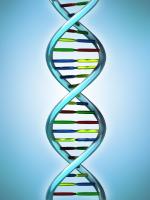
As biochemical techniques developed and improved, the study of genetics become more detailed and intricate. During the 1950s, cytology developed and with it the microscopic study of the chromosomes and other cellular structures that play a part in heredity. Also studies on extranuclear or cytoplasmic inheritance were undertaken, as well as research into the nature of mutation and the problems of developmental physiology and evolutionary genetics. Microbial genetics, which employed fungi and bacteria as experimental systems, became a specialized area of experimental research. All of these developments, however, would have had less impact if it had not been for the discovery in the 1940s that genetic material consisted of nucleic acid and, in the 1950s, the determination of the double helical structure of deoxyribonucleic acid (DNA). Recognition of the double helix was not only important for genetics but was probably one of the most profound biological advances since Darwin's theory of evolution.

Today, "modern genetics" can be defined as the science that deals with the nature and behavior of genes, which are now known to be the basic hereditary units. For these purposes modern genetics makes use of the traditional analysis of variation within single species and crossing experiments and additionally uses the latest methods of cell research, biochemistry, molecular biology, and gene technology. The discipline is now broadly divided into three main subdivisions, although there is considerable overlap between them. The modes of gene transmission from generation to generation is called transmission genetics, the study of gene behavior in populations is termed population genetics and the study of gene biochemistry, structure and function is molecular genetics.

Transmission and population genetics use various classical methods of study, nearly all of which rest on the expression of differences between individuals. The experimental breeding of plants, as established by Mendel, is still performed today and enables geneticists to deduce the methods of inheritance of specific characteristics. The mechanism of heredity is such that the analysis of such experiments requires the use of probability theory. These techniques do not, however, make it possible to analyze portions of the hereditary makeup of individuals for which differences cannot be found. If differences occur, it is also necessary that they be transmitted to later generations. In general the full analysis will also require the presence of sexual reproduction or some analogous process that allows the recombination of inherited properties from different individuals. In brief, what the transmission geneticist usually does is to cross diverse individuals and study the descendents. Such a study must usually be carried through at least two successive generations, and requires enough individuals to establish statistical ratios between the classes present.

The goal of population genetics is to understand the genetic composition of different populations and to study the forces that determine and change that composition. In natural populations, variation in most characters takes the form of a continuous phenotypic range rather than discrete classes. This is because a great deal of genetic variation within and between populations arises from the existence of various forms of genes (alleles) at different loci. Accordingly, a fundamental measurement in population genetics is the frequency at which alleles are found at any gene locus of interest. The frequency of a given allele in a population can be changed by recurrent mutation, selection, or migration or by random sampling effects. Mendelian genetic analysis is therefore extremely difficult to apply to such distributions and more complex statistical methods are employed instead in studies of populations. Pedigree collection and analysis are often used in studies of human genetics, as experimental breeding is not ethically possible. Pedigree charts may be prepared showing the inheritance of specific traits in all the members of a family line, which can be traced. Human population genetics has been useful in tracing population migration and the intermixing of races through, for example, an analysis of the frequency of the various blood antigens. It has also addressed questions on the frequency and distribution of inherited diseases. For example, questions such as why the alleles of Factor VIII and Factor IX genes that cause hemophilia are rare in human populations while sickle cell anemia, another blood disease, is very common in certain parts of Africa? This question has been studied in relation to environmental factors, which can maintain a certain genetic disease, such as a certain resitance to malaria which appears to go hand in hand with sickle cell anemia.

Molecular genetics is that branch of genetics which attempts to characterize the chemistry and physics of the processes of inheritance. These characterizations are all contigent on the fact that genetic material is made up of nucleic acid and involve the genetic chemistry of nucleic acids. Almost all genetic material is composed of DNA although in certain viruses RNA performs that function. Both DNA and ribonucleic acid (RNA) are long-chain polymers formed by the linkage of many nucleotides.

Autocatalytic functioning of genetic material refers to its replication. Because of the double stranded nature of DNA and the rules of base pairing, separation of the two strands provide the complementary structures, which are used as templates for the synthesis of the original double strand. The detailed molecular mechanisms of replication are still being studied though much is already known about the process and the substrates for the reaction are the deoxy nucleotide-triphosphates (dNTPs) and that at many enzymes, including DNA polymerase are involved. DNA polymerase proceeds along the single separated strands of the DANN molecule, recruiting free dNTPs to hydrogen bond with their appropriate complementary dNTP on the single strand (A with T and G with C), and to form a covalent phosphodiester bond with the previous nucleotide of the same strand. The energy stored in the triphosphate is used to covalently bind each new nucleotide to the growing second strand. Genes function heterocatalytically by the copying of an RNA messenger strand from DNA. The same rules of base pairing are involved in this synthesis, although it is carried out by another enzyme, RNA polymerase. The messenger RNA is translated into proteins by an elaborate protein synthesizing machinery which includes ribosomes, special transfer RNA molecules and a host of enzymes. The important point is that three particular nucleotides specify a particular amino acid. These proteins serve the organism both structurally and functionally, for example as enzymes, giving rise to the phenotype ultimately classified by the geneticists.

The most fundamental advances in recent years have been in molecular genetics and the understanding of gene function. They have led to an explosive period in which new genetic knowledge is being applied in medicine and agriculture as gene technology. Humanity is now in a position to make unprecedented manipulations of hereditary material and effectively to create to new species. The end of the twentieth century saw the cloning of the first mammal and the sequencing of the entire human genome. In future the science of genetics will raise many scientific, social and ethical questions.

This is the complete article, containing 1,367 words (approx. 5 pages at 300 words per page).

More Information
  • View Genetics Study Pack
  • 87 Alternative Definitions
  • Search Results for "Genetics"
  • Add This to Your Bibliography
  • More Products on This Subject
    The Cause and Effects of Gene Manipulation
    In a society where high status is based on appearances, people in that higher status must have desig... more

    Genetics
    Genetics is the study of the mode and mechanism of the transmission of heritable information. Hered... more


    Copyrights
    Genetics from World of Genetics. ©2005-2006 Thomson Gale, a part of the Thomson Corporation. All rights reserved.

    Join BookRagslearn moreJoin BookRags


    About BookRags | Customer Service | Report an Error | Terms of Use | Privacy Policy