 Print
Print Word
Word PDF
PDF|
This section contains 4,122 words (approx. 14 pages at 300 words per page) |

|
by Ntozake Shange
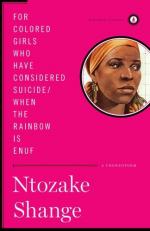
Paulette Linda Williams, born October 18, 1948, is now known by the Zulu name she took in 1971: Ntozake Shange (En-toe- ZAK-kay SHONG-gay). As a child, she was exposed to music, literature, and art in a home environment that fostered pride in her African American heritage, and the future seemed full of promise. Later, however, Shange discovered that the jobs she wanted to fill were closed to her. She turned to writing and became an accomplished poet and novelist, but ultimately it was a dramatic piecefor colored girls who have considered suicide / when the rainbow is enuf-that made her famous. Besides winning the Obie Award and Tony, Emmy, and Grammy award nominations, the work introduced a new theatrical form called the choreopoem.
Events in History at the Time of the Choreopoem
|
This section contains 4,122 words (approx. 14 pages at 300 words per page) |
|