 Print
Print Word
Word PDF
PDF|
This section contains 3,103 words (approx. 11 pages at 300 words per page) |

|
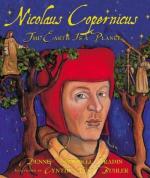
Nicolas Copernicus, or Mikolaj Kopernick, was a Polish clergyman, physician, and astronomer, and the propounder of a heliocentric theory of the universe. He was born at Torun (Thorn) on the Vistula. He studied liberal arts, canon law, and medicine at the universities of Kraków (1491–1494), Bologna (1496–1500), and Padua (1501–1503) and received a doctorate in canon law from the University of Ferrara in 1503. Through the influence of his uncle, the bishop of Ermland, Copernicus was elected in absentia as a canon of the cathedral of Frauenburg in 1497. By 1506 he had returned to Poland, serving as physician to his uncle until 1512, when he took up his duties as canon. Copernicus's duties as canon involved him in the complex diplomatic maneuverings of the time and in the administration of the cathedral's large estates. In his own day he was more widely known as a physician than as an...
|
This section contains 3,103 words (approx. 11 pages at 300 words per page) |
|