 Print
Print Word
Word PDF
PDF|
This section contains 4,175 words (approx. 14 pages at 300 words per page) |

|
by Arthur C. Clarke
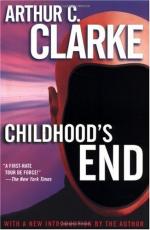
Arthur C. Clarke was born on December 16, 1917, in Minehead, England, a small coastal town on the Bristol Channel. At the age of twelve, he read his first science fiction magazine, a November 1928 issue of Amazing Stories. Four years later, he joined the British Interplanetary Society, a group founded on the common desire for space exploration. For the next two decades, his interest in this group would endure, through his tenure as a radar instructor in the Royal Air Force during World War II and later as a student in physics and pure and applied mathematics at King's College in London. The influence of the interplanetary society is apparent in Childhood's End, the novel most responsible for placing Clarke's name among the foremost science fiction authors.
Events in History at the Time of the Novel
Life in the fifties. "We have arrived at...
|
This section contains 4,175 words (approx. 14 pages at 300 words per page) |
|