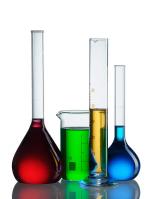
Chemistry is the science that studies the properties and composition of matter, the changes in composition and structure that occur, and the energy phenomena accompanying these changes. The term chemistry is a shortened form of the word alchemy. Alchemy describes the medieval art that searched for the philosopher's stone to change basic metals into gold and heal all diseases. In this quest, those skilled in alchemy started the use of experimentation to test various hypotheses and standardized various common laboratory techniques, such as how to heat, distill, and combine substances.
The beginning of the modern science of chemistry is attributed to Antoine Lavoisier (1743-1794). In 1774, this French scientist demonstrated that oxygen is a critical component of air needed for combustion. This observation led to a better understanding of the changes in composition and structure of matter. Lavoisier later published the first list of elemental substances that eventually evolved into the Periodic Table of the Elements. Other contributions important to early chemistry were made by John Dalton with the concept of the atom, Amadeo Avogadro with his theory that molecules are made up of atoms, and Sir Edward Frankland (1825-1899), who developed the understanding of the chemical reaction.
The field of chemistry is divided into four traditional disciplines: organic, inorganic, analytical, and physical chemistry. Each discipline studies a different facet of the structure and composition of materials and their changes in composition and energy. As molecules and scientific problems become more complex, the traditional areas of chemical investigation begin to overlap with other physical sciences. For example, the fields of biochemistry, medicinal chemistry, electrochemistry and nuclear chemistry have emerged as important non-traditional areas in chemistry.
Organic chemistry is the study of compounds that contain carbon atoms. The term organic was first introduced by the Swedish scientist Jons Berzelius (1779-1848) to refer to substances isolated from living systems. Inorganic compounds were those isolated from nonliving sources. At the time, it was believed that a "vital force" present only in living systems was necessary for the preparation of organic compounds. In 1828, Friedrich Wöhler (1800-1882) first synthesized urea, an organic compound isolated from urine, by evaporating a water solution of the inorganic compound ammonium cyanate. Eventually, the "vital force" theories died and organic chemistry became the investigation of the more than seven million carbon-containing compounds. Today, organic chemists work primarily to synthesize new molecules to be used in pharmaceuticals, surfactants, paints, and coatings. They are also involved in scaling reactions from grams to tons in industrial research laboratories.
Inorganic compounds, at the time of the "vital force" theories, were those materials isolated from nonliving sources. Now, inorganic chemistry is the chemistry of all the elements except for carbon. This includes: the transition metals which coordinate with organic ligands and make up hemoglobin; the very reactive alkali metals used to make organometallic compounds in the manufacture of pharmaceutical materials; and the semi-metallic elements that have unusual electronic properties used in solar cells for the conversion of light into electricity. Inorganic chemists find employment in the production of glass, ceramics, semi-conductors, and advanced synthetic catalysts.
In 1909, Wilhelm Ostwald (1853-1932) was awarded the Nobel Prize in chemistry for his work with catalysis, a very useful technique in industrial manufacturing. This German scientist is referred to as the father of physical chemistry. This branch of chemistry is the investigation of the underlying physical processes that are responsible for chemical properties and phenomena. Physical chemistry describes the influence of temperature, pressure, concentration, and catalyst used in organic and inorganic reactions. These data give important insight into the mechanisms of the chemical change and predict the best experimental methodology for a specific manufacturing process. Physical chemists are employed in industrial, academic, and governmental laboratories to study and calculate the fundamental properties of elements and molecular compounds. This information is used to develop more efficient devices, new applications of chemicals, and better methods for measuring chemical phenomena.
Analytical chemistry is the branch of chemistry involved with the measurement and characterization of materials. Chemical analysis is divided into classical and instrumental methods. Classical, or wet, chemical analysis is the oldest form of analytical chemistry and involves the use of chemical reactions utilizing gravimetric and volumetric methodology to analyze material compositions. The use of instrumental methods for analytical analysis provides comprehensive information about chemical structure. The instrumental technique includes methods for measuring molecular spectroscopy, such as infrared spectroscopy (IR), nuclear magnetic resonance spectroscopy (NMR), mass spectroscopy (MS) and x-ray crystallography. Gas chromatography, liquid chromatography, and electrophoresis are examples of separation methods that utilize instrumental methods. There is a need for analytical chemists in governmental, industrial, and academic research organizations to characterize new materials and determine chemical compositions.
Aside from these traditional areas, chemistry is important in the study of polymers, biotechnology, environmental health and safety, and many non-traditional jobs such as law, marketing, and sales.
This is the complete article, containing 798 words
(approx. 3 pages at 300 words per page).