 Print
Print Word
Word PDF
PDF|
This section contains 6,046 words (approx. 21 pages at 300 words per page) |

|
by Rudolfo A. Anaya
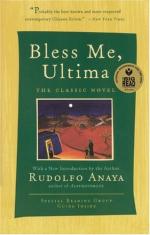
Rudolfo Alfonso Anaya was born in 1937 in New Mexico, and his family history mimics that of the region. His father was a vaqueros, one of the free-spirited horsemen who began working the cattle and sheep ranches of the llanos or wild plains before the arrival of the American cowboy; his mother belonged to a farming family with ties to settled village life. Those are the two halves of my nature, Anaya observes. Much is in the blood, because the blood has memory . . . the whispers of the blood are stories (Anaya in Clark, p. 41). Other legacies from Anayas and New Mexicos past concern the Hispano-Catholic and pre-Catholic traditions of the region. These several legacies converge in Bless Me, Ultima and are at the heart of the dilemma faced by the novels young hero.
Events in History at the Time the Novel Takes Place
|
This section contains 6,046 words (approx. 21 pages at 300 words per page) |
|