Forgot your password?  

Not What You Meant?  There are 16 definitions for All-star.  Also try: Pops or Armstrong award or Satch or Gatemouth.

Armstrong, Louis (1901-1971) | Research & Encyclopedia Articles

Print-Friendly   Order the PDF version   Order the RTF version
About 5 pages (1,493 words)
Louis Armstrong Summary


Armstrong, Louis (1901-1971)

Daniel Louis Armstrong—trumpeter and singer—was one of the most important musicians in jazz and in twentieth-century music, achieving seemingly insurmountable odds given his humble origins. Armstrong proved himself as the first vital jazz soloist and one of jazz's most creative innovators, winning worldwide appeal and achieving commercial success. Armstrong helped to transform the traditional New Orleans jazz style—based on collective improvisation—to jazz featuring a star solo, thereby elevating jazz to a sophisticated form of music. Clearly a versatile musician, he was an active participant in a number of jazz styles, including the New Orleans style of the 1910s, the Chicago style of the 1920s, the New York style in the 1930s, and the jazz of the wider world in the 1950s. Armstrong was one of the first blacks seen in feature-length films; in total he appeared in nearly 50. In addition to a sponsored radio show, the United States State Department and private organizations sponsored international tours of his music and performances, earning him the nickname "Ambassador Satch."

For many years, July 4, 1900 was cited as Armstrong's birth date, but the discovery of his baptismal records confirm that his real birth date was August 4, 1901. His birthplace of New Orleans was a haven for all kinds of music, from French Opera to the blues. He grew up in the "Back o' Town" section near the red-light district, and therefore heard and absorbed the rags, marches, and blues that were the precursors to early jazz. Because his family was so impoverished—he barely had enough to eat and wore rags as a child—Armstrong often sang on the street as a kid. His father, a laborer, abandoned the family when he was young and his mother was, at best, an irresponsible single parent who left the young Armstrong and his sister in the care of relatives. In addition to singing on the streets, Armstrong sang in a Barbershop quartet, providing an excellent opportunity for him to train his ear.

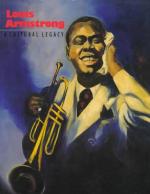
Louis ArmstrongLouis Armstrong

As a teenager, Armstrong found himself in trouble for general delinquency and had to spend more than two years at the Home for Colored Waifs. He eventually found an outlet in the school band, first taking up the tambourine and later the cornet under his teacher Peter Davis. Armstrong mastered the school's repertoire of marches and rags, and eventually became the leader of the Home's brass band that frequently played for picnics and parades. Upon his release, Armstrong decided that he wanted to become a musician. Not owning a horn did not deter him. He played his first job at a honky-tonk in Storyville's red-light district; he used a borrowed horn and performed blues and other songs from his limited repertoire. When not playing his regular job, Armstrong would frequent clubs and listen to various musicians playing the blues.

Cornetist and bandleader Joe "King" Oliver was impressed with Armstrong and took him under his wing. When Oliver left for Chicago in 1918, Armstrong took his place as cornetist in the band led by Kid Ory. In the same year, he married a prostitute, but the relationship soon ending in divorce. He continued to work in clubs with established bands, and on the side formed his own group. Pianist and bandleader Fate Marable then hired Armstrong to work on the riverboats, and the job provided him with the opportunity to improve his musicianship. During this period, a melophone player named David Jones taught Armstrong to read music. By 1922, he was invited to join King Oliver as second cornetist in Chicago at the Lincoln Gardens. The Oliver job showcased the young Armstrong's prowess as a virtuoso improvisor who would "swing" at the slightest provocation. In 1924, Armstrong married pianist Lil Hardin and, upon her insistence, moved to New York where he joined the Fletcher Henderson Orchestra. His solos and improvisation drew the attention of New York musicians, but by 1925 he returned to Chicago where he joined the Erskine Tate "symphonic jazz" Orchestra and, subsequently, Carroll Dickerson's Orchestra. He was now billed as "Louis Armstrong, world's greatest trumpet player." With his popularity soaring, in 1929 Armstrong joined the hit show Hot Chocolates, where he sang "Ain't Misbehavin'." Significantly, Armstrong had become a sensation appreciated by both black and white audiences. It was a pivotal point in his career.

Armstrong could have easily chosen to pursue a career leading a jazz group, but instead, he opted for broadening his commercial appeal by singing popular tunes and becoming a showman. His decision was, perhaps, influenced by his childhood, but managers Tommy Rockwell and Joe Glaser also played an important role in the direction of his career. Many critics assert that Armstrong's musical legacy stopped in the year 1936, when, as the noted jazz critic Leonard Feather observed: "The greater his impact on the public, the less important were his musical settings and the less durable his musical contributions."

In 1925, Armstrong began to record under the name Louis Armstrong and His Hot Five. These recordings, which can be placed into four categories, had a profound influence on jazz, and are regarded as one of the most momentous recordings in the music of the twentieth century. The first category of the Hot Five recordings are in the New Orleans style, but Armstrong's scatting on "Heebie Jeebies" set a precedent for the scat style of singing. The second category was recorded with the enlargement of the quintet to include a tuba and drums, issued under the name of Louis Armstrong and His Hot Seven; "Potato Head Blues" is considered stellar in this group. The third category consisted of the group returning to the original Hot Five band with the extraordinary "Struttin' with some Barbecue," and the highly regarded "Hotter than that." The fourth category included Earl Hines as pianist. The recordings in this category are considered by many critics as Armstrong's greatest. Including gems such as "Weather Bird," "West End Blues," and "Don't Jive Me," they were made in 1928 and reflect Armstrong's break with the New Orleans style. Hines possessed a facile technique and an inventive mind, the result of which were improvisations where the right hand of the piano mimicked the trumpet in octaves; the trademark gave rise to the term "trumpet style" piano. Armstrong and Hines complimented each other, feeding, inspiring, and spurring one another to create sheer musical excellence.

Armstrong's big band group of recordings represent him as a bandleader, solo variety attraction, and jester. In this format, he largely abandoned the jazz repertoire in favor of popular songs vis á vis the blues and original compositions. A majority of the bands he fronted, including Luis Russell and Les Hite, fell short of his musical genius.

Armstrong signaled his return to the New Orleans style with the All Stars in 1947. The sextet made their debut in August 1947 after his appearance in the mediocre film New Orleans. The music was superb and seemed to placate the critics. The All Stars featured trombonist Jack Teagarden, clarinetist Barney Bigard, pianist Dick Cary, drummer Sid Catlett, and bassist Arvell Shaw, although the group's personnel continually changed. This smaller group was an instant success and became the permanent format that Armstrong guided until his death; together they recorded the highly acclaimed Autobiography sessions.

As early as 1932 Armstrong toured Europe, playing at the London Palladium. This was the first of many trips taken for concerts and television appearances. The transformation from musician to entertainer had taken full effect. "You Rascal You," among other novelty songs, were audience favorites. Ella Fitzgerald, Oscar Peterson, and the Dukes of Dixieland were among the diverse stylists who recorded with Armstrong.

The excruciating touring demands that began in the 1930s would eventually take their toll on Armstrong. He had already experienced intermittent problems with his health and shortly after playing a date with the All Stars at the Waldorf Astoria in New York, Armstrong suffered a heart attack. He remained in intensive care for more than a month and returned home, where he died in his sleep on May 6, 1971.

A musical legend, Armstrong's style was characterized by a terminal vibrato, an exceptional ability to swing playing notes around the beat, and an uncanny appreciation for pauses and stops which showcased his virtuoso technique. He used dramatic devices to capture the attention of audiences, including sliding or ripping into notes, either ending a phrase or tune on a high note. His ebullient personality showed through his music, and his style was dictated by a savoir faire that was embraced by his fans throughout the world.

Further Reading:

Armstrong, Louis; edited by Thomas Brothers. Louis Armstrong, In His Own Words: Selected Writings. New York, Oxford University Press, 1999.

——. Satchmo: My Life in New Orleans. New York, Prentice-Hall, 1954.

Berrett, Joshua, editor. The Louis Armstrong Companion: Eight Decades of Commentary. New York, Schirmer Books, 1999.

Boujut, Michel. Louis Armstrong. New York, Rizzoli, 1998.

Chilton, John, and Max Jones. Louis: The Louis Armstrong Story 1900-1971. Boston, Little, Brown and Company. 1971.

Giddins, Gary. Satchmo. New York, Anchor Books, 1992.

This is the complete article, containing 1,493 words (approx. 5 pages at 300 words per page).

More Information
  • View Armstrong, Louis (1901-1971) Study Pack
  • 16 Alternative Definitions
  • Search Results for "Armstrong, Louis (1901-1971)"
  • More Products on This Subject
    Louis Daniel Armstrong
    Louis Daniel Armstrong (1900-1971) was an early jazz trumpet virtuoso, and he remained an important... more

    The Life and Work of Louis Armstrong
    Louis Armstrong, arguable the greatest entertainer and trumpet player during the Harlem renaissance ... more


    Ask any question on Louis Armstrong and get it answered FAST!
    Answer questions in BookRags Q&A and earn points toward
    discounted or even FREE Study Guides and other BookRags products!
    Learn more about BookRags Q&A
    Copyrights
    Armstrong, Louis (1901-1971) from St. James Encyclopedia of Popular Culture. ©2005-2006 Thomson Gale, a part of the Thomson Corporation. All rights reserved.

    Join BookRagslearn moreJoin BookRags

    Join BookRagslearn moreJoin BookRags