 Print
Print Word
Word PDF
PDF|
This section contains 1,817 words (approx. 7 pages at 300 words per page) |

|
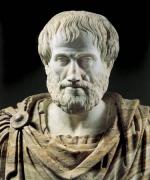
Aristotle was born in northern Greece, in the town of Stagira, in 384 B.C.E. At seventeen, he went to Athens and became a student in Plato's Academy, where he remained for twenty years. Although greatly influenced by Plato and by the pre-Socratic philosophers, especially Empedocles, Aristotle was a highly original thinker and a disciple of no one. In 347 B.C.E. he left Athens and traveled extensively in Asia Minor, becoming tutor to Alexander the Great in 342 B.C.E. Seven years later he returned to Athens and began his own school, the Lyceum. After the death of Alexander the Great in 323 B.C.E., he left Athens, and he died the following year in Khalkís, a few miles north of Athens.
In his main work on memory, De memoria et reminiscentia, Aristotle tries to dissect out the...
|
This section contains 1,817 words (approx. 7 pages at 300 words per page) |
|