 Print
Print Word
Word PDF
PDF|
This section contains 5,187 words (approx. 18 pages at 300 words per page) |

|
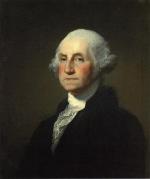
George Washington (1732–1799; served 1789–97) was inaugurated for a second term as U.S. president on March 4, 1793, in Philadelphia, Pennsylvania. Having spent his first term guiding the creation of a new government, Washington hoped to focus more on foreign policy issues during his second term. However, he would be faced with challenges both at home and abroad.
By 1793, two political factions (groups of people who hold viewpoints on political matters different from other groups) had formed in the United States. The Federalists were led by Secretary of the Treasury Alexander Hamilton (1755–1804), and the Republicans were followers of Secretary of State Thomas Jefferson (1743–1826). The factions first emerged during debates over Hamilton's economic policies. Each side looked upon the other as a danger to the republic. A republic is a country governed by the consent of the people and for the benefit of the people through...
|
This section contains 5,187 words (approx. 18 pages at 300 words per page) |
|