 Print
Print Word
Word PDF
PDF

|
Call of the Wild Author/Context
Jack London is a man who is often misunderstood because of the complexity of his life. Considered by some to be oozing with shallow virility and machisimo, London is instead a man filled with sensitivity and wisdom about the human condition. Born on January 12, 1876 to the unmarried Flora Wellman and William Chaney in San Francisco, California, John Griffith Chaney was renamed John Griffith London, later called "Jack," when William denied that he was his father, and Flora instead married John London, Jack's stepfather. His early years were spent in San Francisco, where he began reading classic stories at the age of eight, an interest that would only continue to spread when th London family moved to nearby Oakland two years later. Jack continued to attend school and took on a number of different jobs ranging from a newspaper route, being an oyster pirate in San Francisco Bay, and a factory laborer. After graduating from the eighth grade in 1890, London toured the country, marching with a labor union to Washington, DC, and then wandering around the northeast as a hobo, meeting new friends in Boston and Buffalo.
After returning to Oakland, Jack was determined to complete his education, enrolling in Oakland High School, where he is a prolific writer for the school's newspaper. Later he became interested in the Socialist Party, influenced no doubt by his days as a factory laborer, and this anti-capitalist political philosophy would shape his later writing as well. Eventually London went to the University of California at Berkeley in 1896. Impoverished and disappointed with academic life, London dropped out of college soon after, heading northward to Alaska where the Klondike Gold Rush is in full swing. He returned after a short time, empty-handed and discouraged by the rugged, icy weather. Jack made a return trip later that year, reaching the Yukon Territory but he did not find any gold. Empty-handed, Jack went back to his mother again, who was struggling to survive after her husband's sudden death. Jack London became the man of the house, writing furiously. Soon after, Jack was offered a steady job as a postal worker, but he turned it down in hope that he could support himself solely off of his writing. Fortune smiled upon him, however, when short story "To the Man on Trail" was published soon after in Overland Monthly in 1899.
After this initial victory, popularity came more easily to London. His short stories gained wider acceptance in the American reading community, as he forged the way for this new genre and a literary style moving away from the romanticism that filled the nineteenth century towards the realism of the twentieth. Filled with confidence, London published The Son of the Wolf, marrying his first wife Bessie in 1900. However, it was not until the serialized publication of Call of the Wild in the Saturday Evening Post during the summer of 1903 that London became a national sensation, separating from Bessie in favor of the new love of his life, Charmian. In 1904 London journeyed to Asia to serve as a war correspondent in the Russo-Japanese Warm, writing The Sea-Wolf among other works, publishing furiously upon his return, and involving himself in the Socialist Party of Oakland. Tired of urban life, London then bought a huge ranch complex in Glen Ellen, California, north of San Francisco, honeymooning soon after with Charmian in the Caribbean. He writes firsthand newspaper reports about the devastating San Francisco Earthquake of 1906, publishing White Fang soon after. By this time, London had enough money to build a magnificent boat named the Snark, fit to travel around the world, setting sail with his wife on a planned seven year world voyage in 1907. Venturing first to Hawaii, London met with the native headhunters there.
Suddenly afflicted by sickness, he had to cancel the rest of the planned trip and returned to California, much to his intense disappointment. He sold the Snark and spent time on his ranch in Glen Ellen for the next few years, publishing Martin Eden (1909), South Sea Tales (1911), and Smoke Bellow (1912). In 1912 he took a sea voyage around South America, but the following year brought great tragedy to Jack London's life. His nearly completed dream mansion on the ranch property, Wolf House, burnt to the ground in a mysterious fire; his jealous ex-wife Bessie harassed him again; Charmian miscarried her pregnancy; and the ranch itself had a poor year for crops. He nevertheless published John Barleycorn (1913) and The Valley of the Moon (1914). In 1915 Jack went to Mexico as a news war correspondent during the Mexican Civil War, although the short war already over by the time he arrived there, much to his dismay. Returning to California, London wrote one more novel, The Star Rover, and also resigned from the Socialist Party he had worked for so devotedly throughout his life because of its lack of "fire and fight." He succumbed to death on November 22, 1916, soon after eating his dinner. Passing away at the age of forty after hours of pain and with a doctor present, London's official cause of death was kidney failure.
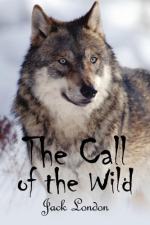
Overall, London wrote over fifty novels and dozens of short stories, although nothing was ever as popular as his initial The Call of the Wild (1903). Inspired by London's own arduous journey from California to the Yukon Territory during the Klondike Gold Rush, this book parallels London's struggle to strip aside the excesses of his city upbringing, with Buck's inward fight to survive. It took a second trip to Alaska before London was prepared to face the untamed wilderness, revealing that he had to overcome his inner fears first. Like Buck, London traveled the Chilkoot and the Dyea Pass, ending at the mining center of Dawson City. Near his death, when doctors urged London to quit drinking alcohol, stay indoors, and watch his diet, he ignored them and continued to live as he always had. A man most comparable to Ernest Hemingway in his craving for risk and adventure, Jack London would rather have lived fully, or rather not live at all. During his travels, London discovered a primal strength that he, like Thornton, can admire from afar, but which he can never have for himself. Like Thornton, London's life ended early, silencing whatever bold dreams he had for the future, except for those glimpses of London's fervent imagination one can gain in reading the colorful books that are this man's greatest wealth.
Bibliography
Bedford/St. Martin's Publisher - Fiction: Jack London. 21 August 2002.
Circle City, Alaska: The Official Site. 21 August 2002.
City of Dawson, Yukon Territory: Dawson City Community Profile.
Jack London Ranch Album, 2002. 21 August 2002.
"The Klondike Gold Rush." Center for the Study of the Pacific Northwest. 21 August 2002.
London, Jack. The Call of the Wild. Mahwah, New Jersey: Watermill Press, 1980.
Lundberg, Murray. Stampede Routes to the Klondike Gold. 21 August 2002.
Virtual Guidebook to the Northern Yukon. 21 August 2002.
Wissdorf, Reinhard. Jack London International, 1999. 21 August 2002.
Map of the Yukon Territory. 21 August 2002.