 Print
Print Word
Word PDF
PDF

|
The Catcher in the Rye Topic Tracking: Innocence
Chapter 4
Innocence 1: Holden's agitation about what Stradlater's going to do with his old friend Jane Gallagher shows Holden's innocence and sensitivity about sexual matters, an innocence a little surprising for a boy his age.
Chapter 7
Innocence 2: Holden's response after his fight with Stradlater (he feels "lonesome and rotten") shows that he's still a pretty innocent and sensitive boy. By choosing to strike out on his own for a few days, however, Holden indicates that he may be ready for a journey that will lead to a loss of some of this innocence.
Chapter 11
Innocence 3: When Holden is thinking about his innocent and sweet summer with Jane, he happens also to be sitting in a "vomity looking" chair. This sort of tension between Holden's often-innocent thoughts and his increasingly seedy surroundings and experiences is evident throughout the novel.
Chapter 13
Innocence 4: Holden reveals his sexual innocence by blurting out that he's a virgin during his description of his encounter with Sunny, the prostitute. He's quite frank about this, as if he'd rather just get it off his chest than pretend to experience he doesn't have.
Chapter 16
Innocence 5: The first time the "catcher in the rye" is mentioned in the novel is when Holden sees a little boy and his parents walking down the street, singing a song about the catcher. The little boy seems to be in his own world, yet he is still safe and protected by his parents. This childhood innocence is what Holden seems to most long for later in the novel and what he strives to protect in others, too.
Innocence 6: When Holden tells the story about the trips he used to make as a kid to the Museum of Natural History, he's full of nostalgia for these old and innocent times. Thinking about how these times are gone forever, Holden is driven almost to despair.
Chapter 17
Innocence 7: Even though Holden has a lot to say about how annoying and phony Sally Hayes is, he ultimately wants to include her in an innocent vision of his: that the two of them might escape the phoniness and go off to live together in Massachusetts or Vermont.
Chapter 22
Innocence 8: When Holden's sister Phoebe demands that he tell her one thing that he really likes, Holden's response - that he really likes Allie and he really likes just sitting there, talking to Phoebe - shows that he's most content in the simple and innocent world of his childhood.
Innocence 9: When Holden explains his idea of the catcher in the rye more fully, it's revealed to be his vision of a protected field of innocence where Holden is the guardian stopping kids as they race towards the edge.
Chapter 24
Innocence 10: Mr. Antolini presents Holden with a vision of the man he'll become if he continues down the path of turning his innocence into cynicism. In this vision, Holden will become bitter and hate everyone by the time he's thirty.
Chapter 25
Innocence 11: When Holden walks down Fifth Avenue, he feels as if he's falling off the edge of the world every time he steps off a curb. This can be read as symbolic of Holden's loss of innocence - there is no catcher in the rye for him.
Innocence 12: All of the fuck you's that Holden begins to notice scratched on the walls of places frequented by kids are particularly distressing to him. They demonstrate that the innocent world of children has already been infected by the profanities of the adult world.
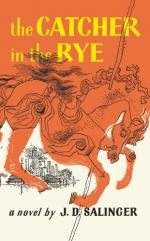
Innocence 13: When Holden watches Phoebe on the carousel, he's both afraid that she's going to fall off reaching for the brass ring and happy to watch his sister's happiness. He finally concludes that you have to let kids reach for the gold ring and you can't always worry about protecting them, since they have to grow up in their own way. "If they fall off, they fall off, but it's bad if you say anything to them." (pg. 211).